
Custom Leather Patches for Jackets
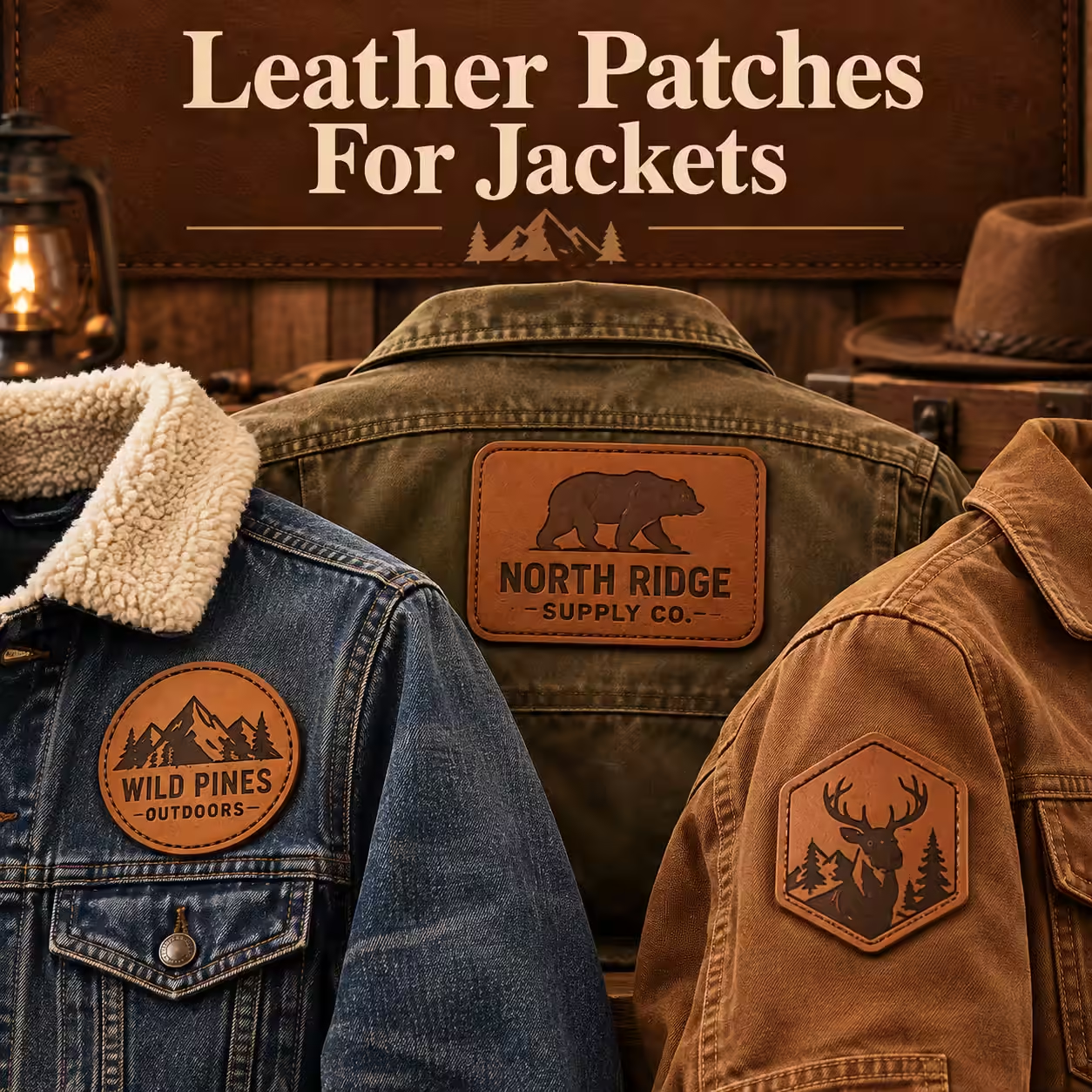
Custom leather patches for jackets are leather or faux leather logo emblems applied to chest, sleeve or back panels. Denim jackets, work jackets, overshirts and outerwear need patch materials and backings matched to panel movement, lining access and garment care.
On this page · 13 sections
What Are Custom Leather Patches for Jackets?
A custom leather jacket patch is an emblem made from leather and used to brand a jacket. The patch material is distinct from the jacket material. This page covers those branded emblems rather than repair panels or generic embroidered jacket badges.
Best Jacket Types
Jacket suitability depends on the receiving panel and its construction. Denim and robust woven fabrics offer different sewing conditions from padded, coated or stretch outerwear. Check the garment maker’s instructions before modifying a specialised fabric.
Denim jackets
A denim jacket offers chest, sleeve or back placements with different panel sizes. Keep pocket access, seams and dye transfer in the attachment plan.
Work jackets
Jacket panels need an emblem that moves with the wearer. Check liners, pockets and any specialist garment restrictions before attaching a patch.
Overshirts
Overshirts often use lighter panels than work jackets. Keep patch weight and stiffness proportionate to the fabric so it hangs comfortably.
Outerwear
Outerwear may use coatings, padding or technical fabrics. Follow the garment maker’s guidance before puncturing or heating the receiving panel.
Best Patch Positions
A useful patch position stays visible without obstructing movement, pockets or fastenings. Chest, sleeve and back placements create different viewing distances. Mark the intended area on the actual garment before deciding the final artwork scale.
Chest
Chest placement offers a visible compact branding area. Check pocket openings and folds, then test the outline while the garment is worn.
Sleeve
Sleeve placement needs a flexible shape that follows a narrow moving surface. Check the logo orientation with the arm relaxed and bent.
Back
Back placement can accommodate a larger graphic but increases the effect of stiffness. Test movement with a full-size outline before approving material.
Patch Size by Placement
Patch size should follow the local panel, not the jacket’s overall size. A sleeve needs a narrower flexible design than a back panel. Use a paper template and check the garment while worn to see how the outline moves.
Best Leather Materials
The best jacket patch material balances the required texture with garment flexibility and care. Genuine leather can add natural character, while faux leather can offer a more uniform face. Test the selected construction against the jacket’s cleaning requirements.
Best Finishes
Debossing gives a recessed mark, embossing adds relief, engraving suits detailed tonal artwork, and printing supports colour-led designs. Larger jacket placements allow more detail but do not remove production limits. Keep the design readable from its expected viewing distance.
Sew-On vs Other Backings
Sew-on attachment can give a defined durable border where panel access allows. Hook-and-loop supports removable branding, while adhesive and heat-seal require specific compatibility. Sewing through a liner or pocket by accident can impair the garment even when the patch looks correct.
Large Back Patches
Large back patches need careful control of weight and stiffness. Divide visual detail with open space instead of using one dense logo block. Confirm that the chosen leather can move across the wearer’s back without pulling the jacket panel.
Artwork and Logo Detail
Jacket artwork should separate essential branding from optional small text. Mark the cut contour and attachment margin clearly. For a large emblem, inspect both the close-up detail and the overall silhouette at the distance people will normally see it.
Care and Washing
Care and washing follow the most restrictive compatible instructions for the jacket and patch. A washable jacket does not establish that its leather emblem can use the same cycle. Consider removable branding if the garment has demanding cleaning requirements.
How to Order
Send the jacket type, placement photograph or measurements, logo, patch dimensions, quantity and backing preference. State whether patches are supplied loose or need to be attached. Include the garment care requirements before the specification is confirmed.
FAQs
Can a patch be attached over a jacket pocket?
Only if attachment preserves the pocket’s function and construction. Check both sides before stitching.
Does a larger back patch need thicker leather?
Not automatically. Additional thickness can restrict movement over a large area.
Are these leather-jacket repair patches?
No. This page concerns custom branding emblems made from leather or faux leather.
Turn the details into a clear specification
Send your logo, dimensions and quantity with the product placement choices discussed above. Include the receiving product and any wash or delivery requirements so the quotation can address your intended use.