
Leather Patch Quality
Leather patch quality means a clear logo, suitable material, a clean outline and an attachment that fits the product. The checks below explain what to agree and inspect from artwork through the finished patch; order-specific tolerances and inspection arrangements should be confirmed in writing.
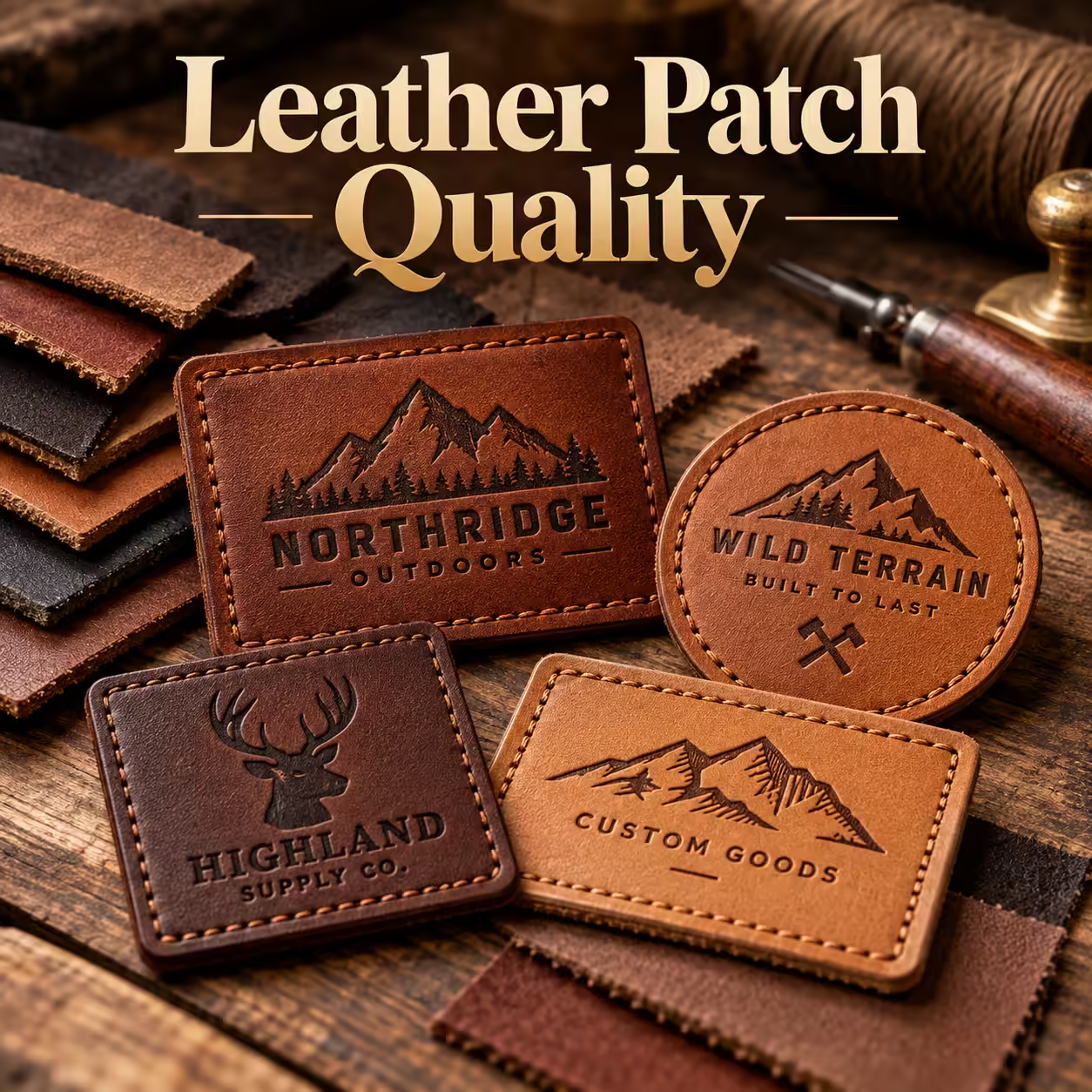
What Quality Means for a Leather Patch
A quality leather patch matches an agreed specification and works in its intended placement. Appearance alone is not enough: the border, flexibility, backing and care compatibility matter too. Define those requirements before deciding whether a result is acceptable.
Artwork Checks
Artwork checks should cover spelling, dimensions, line clarity, gaps and the relationship between the logo and attachment margin. A proof needs to identify which elements are cut, recessed, raised or printed. Clear approval reduces avoidable production ambiguity.
Material Selection
Material selection should connect the required look with decoration and end use. Inspect grain, face condition, flexibility and the relevant colour reference. A material’s name does not establish suitability for every logo or garment care process.
Leather Variation and Tolerances
Natural variation and manufacturing tolerances are different issues. Grain differences may be expected in hide, while dimensions and placement need agreed limits. Request the tolerances relevant to the order instead of assuming a universal numerical standard.
Logo Detail and Legibility
Logo legibility should be checked at finished size under ordinary lighting. Inspect the smallest lettering, enclosed counters and neighbouring lines. A mark that looks sharp only when enlarged may not perform as intended on the garment.
Backing Inspection
Backing inspection should assess the specified construction, coverage and alignment. Sew-on patches need a usable margin; removable patches need secure fastening layers; adhesive systems need their approved application. A visual check alone does not establish a wash or bond rating.
Colour and Batch Consistency
Colour consistency should be assessed against the approved physical reference and agreed variation. Compare patches under consistent lighting, especially when several will appear together. Repeat orders may need a new stock check even when the colour name is unchanged.
Final Inspection
Final inspection should compare the finished goods with the approved artwork and order schedule. Check outline, decoration, backing and variant quantities as applicable. Confirm which inspections the supplier performs and what acceptance criteria apply to your run.
How Defects Are Handled
If you find a suspected defect, retain the order reference and photograph the issue clearly. Distinguish a specification mismatch from agreed natural variation, and report the affected quantity. Ask for the applicable resolution process rather than assuming a remedy not stated in the order terms.
Quality FAQs
Is natural grain variation a defect?
Not necessarily. Compare it with the approved material and agreed variation; dimensional or artwork errors are separate issues.
What should I provide when reporting a problem?
Supply the order reference, clear photographs, affected quantity and the part of the specification you believe differs.
Are tolerances published for every patch?
No universal tolerances are assumed. Agree relevant limits for the selected construction.
Turn the details into a clear specification
Send your logo, dimensions and quantity with the patch choices discussed above. Include the receiving product and any wash or delivery requirements so the quotation can address your intended use.