
Leather vs PVC Patches
Leather patches provide natural or leather-look texture and decorated depth; PVC patches use moulded plastic for a coloured relief design. PVC faces resist water, while leather care varies by material and finish. Compare the whole patch and attachment for outdoor use.
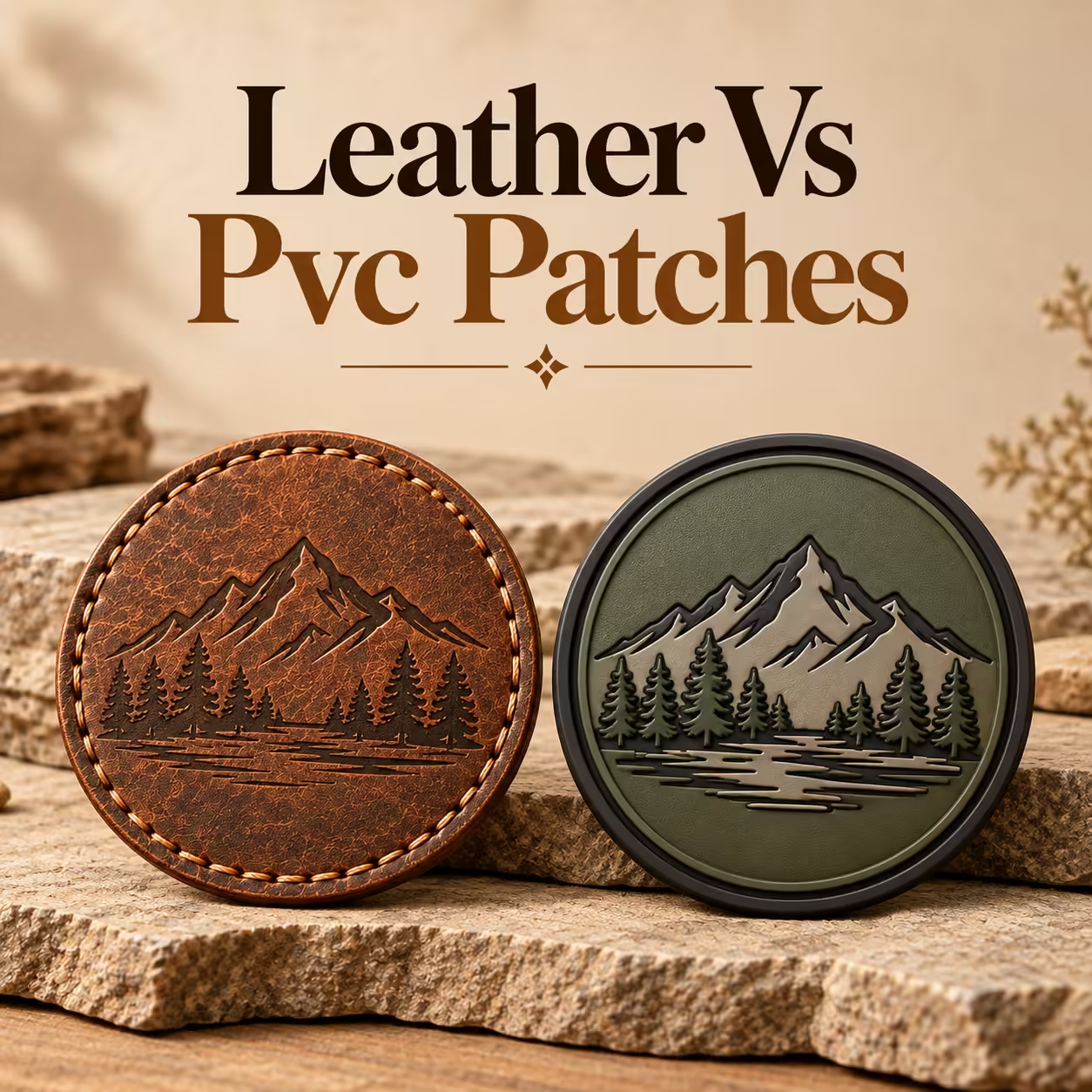
Leather vs PVC: Quick Comparison
Leather and PVC differ in material, appearance and response to exposure. A PVC face resists water, but the completed item also includes backing, stitching and a receiving product. Leather offers a different tactile effect and should follow material-specific care.
| Attribute | Leather | PVC |
|---|---|---|
| Material | Hide or leather-look sheet | Moulded polyvinyl chloride |
| Face | Grain or decorated texture | Moulded plastic |
| Water | Tolerance varies by construction | Face resists water |
| Relief | Pressed or surface decoration | Moulded levels and shapes |
| Brand effect | Natural or leather-look texture | Coloured moulded emblem |
| Exposure | Material-specific assessment | Assess backing and attachment too |
Material and Construction
Leather patches use hide or a synthetic leather-look sheet with a decorated face. PVC patches are moulded from polyvinyl chloride, a plastic. Describing PVC as rubber obscures the material difference and does not establish its environmental performance.
Water Resistance
PVC faces resist water, while leather water tolerance depends on tanning, coating and finish. The attachment can remain a weak point in either construction. Evaluate the complete item where rain, immersion or repeated wet use is expected.
Texture and Appearance
Leather shows grain, nap or a coated leather-look face; PVC has a moulded plastic surface. Leather can suit understated tonal branding, while PVC can provide distinct coloured relief. Compare both with the intended garment or equipment.
2D and 3D Detail
PVC moulding can form flat-level or raised designs according to the tooling. Leather embossing and debossing create a different kind of relief in a sheet material. Both need enough space for small features to remain distinct.
Colour
PVC colour is incorporated into the moulded design; leather colour can come from the substrate, print or fill. Matching depends on the actual production system and physical reference. Neither a screen image nor a generic material label proves exact brand-colour reproduction.
Flexibility
Flexibility depends on thickness and construction in both materials. A thick emblem can resist a curved panel even when the face material feels soft. Check the assembled patch with its backing on the real product.
Outdoor and Tactical Use
Outdoor and equipment use should be assessed for water, abrasion, sunlight and the fastening system. PVC can be a useful candidate where a water-resistant face matters. Leather may still suit selected applications, but its care and exposure limits need to be accepted.
Fashion and Clothing Use
Fashion and clothing use often places greater emphasis on texture and visual coordination. Leather can complement denim and other leather details; PVC creates a contrasting moulded effect. Weight, skin contact and washing remain part of the specification.
Price Factors
Price follows material, dimensions, tooling, design complexity, quantity and backing. Compare the same order scope before concluding one construction is cheaper. Added relief and colour areas can change preparation requirements.
Which Should You Choose?
Choose leather for its surface character when the product’s care allows it. Consider PVC when moulded colour and a water-resistant face better fit the use. Confirm backing and attachment performance separately from the visible material.
FAQs
Is PVC rubber?
No. PVC is polyvinyl chloride, a plastic used in moulded patches.
Does a water-resistant face make the garment waterproof?
No. Attachment, backing and the garment itself must be assessed separately.
Can leather suit outdoor branding?
It can suit selected applications when its exposure and care limits are accepted. Evaluate the actual construction.
Turn the details into a clear specification
Send your logo, dimensions and quantity with the construction choices discussed above. Include the receiving product and any wash or delivery requirements so the quotation can address your intended use.