Custom Leather Patches
Custom leather patches are branded emblems cut from genuine or faux leather and marked by debossing, embossing, laser engraving or print. UK clothing brands, hat makers and workwear suppliers order them to label caps, jeans, jackets and bags with a mark that outlasts thread. We make bespoke leather patches in any size, shape and colour, with sew-on, heat-seal, self-adhesive or hook-and-loop backing. Every order includes a free digital proof before production starts.
What Are Custom Leather Patches?
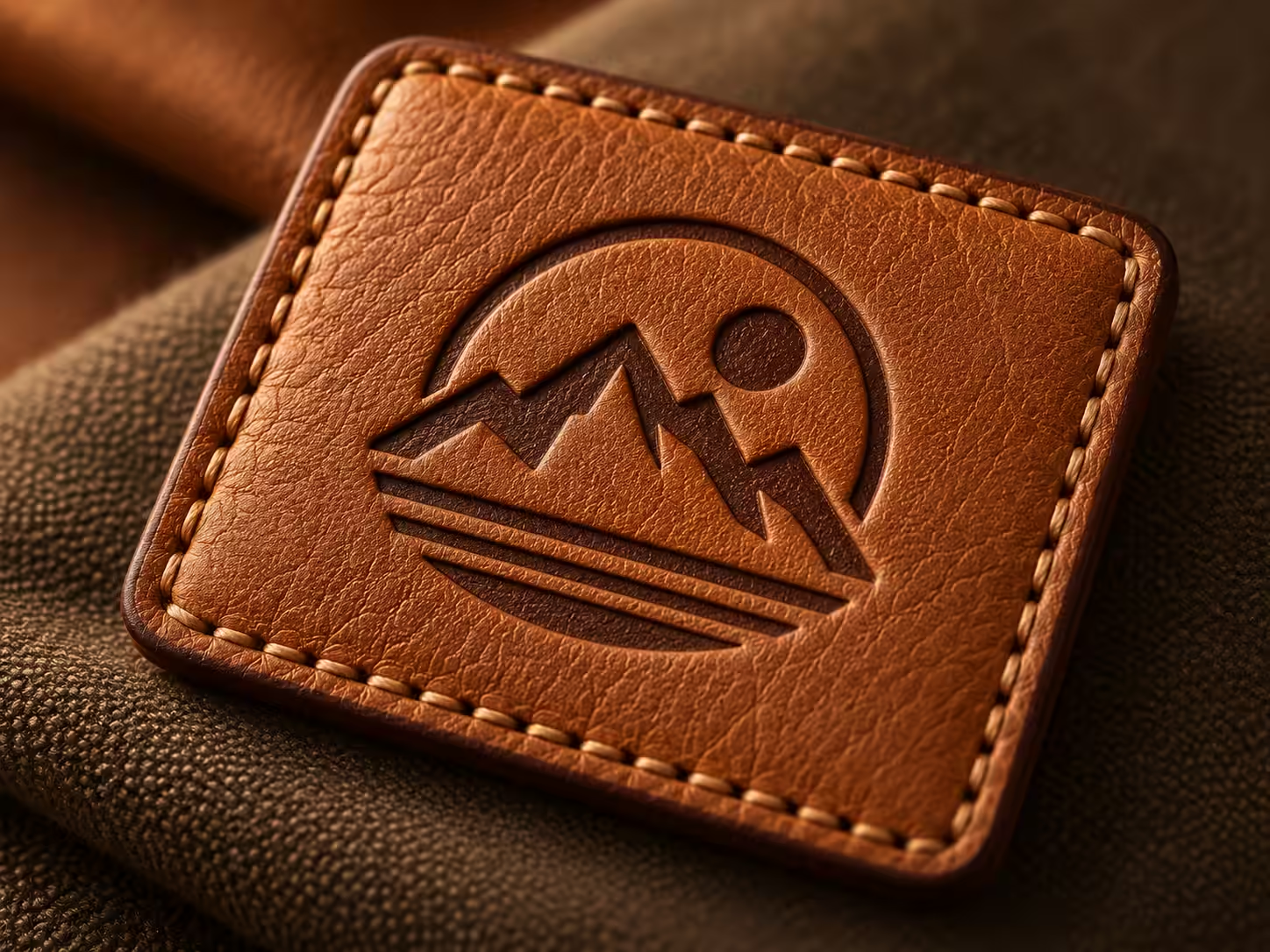
A leather patch is a single-layer emblem cut from tanned hide and fixed to a garment, bag or cap. The patch carries your logo as a physical impression in the surface rather than as stitched thread on fabric. Leather thickness ranges from 1.2 mm to 2 mm, which gives the patch body without stiffening the material underneath. That body is why leather patches sit flat on the front panel of a structured cap while thinner badges buckle.
Leather also ages. The hide darkens and develops a patina across months of wear, so a leather patch reads as older and more established than the garment it sits on. Clothing brands use that effect deliberately on denim and outerwear.
Genuine Leather, Suede and Faux Leather Explained
The material decides the finish, the price and the care instructions. We work with four substrates:
- Full-grain leather keeps the outer surface of the hide intact. The grain stays visible, the patch resists scuffing, and the patina develops fastest.
- Top-grain leather is sanded and finished for a smoother, more uniform face. Fine lettering presses cleanly into it.
- Suede is a split hide with a napped surface. The texture softens a debossed logo and suits heritage and outdoor branding.
- Faux leather (PU) is a polyurethane-coated fabric. It is vegan, colour-consistent from batch to batch, and the lowest-cost option for large runs.
Genuine hide varies in tone and grain from piece to piece. That variation is a property of the material, not a fault, and it is the reason two patches from the same order never look identical. Faux leather removes the variation entirely, which matters when a logo must match across thousands of units.
How Leather Patches Differ From Embroidered Patches
Embroidered patches build an image out of thread stitched onto twill. Leather patches press an image into hide. Thread carries colour; leather carries texture and depth. An embroidered logo reproduces eight Pantone shades accurately, while a debossed leather logo reproduces one tone and relies on shadow for contrast.
The two types also fail differently. Embroidery frays at the merrow border after heavy laundering, whereas leather scuffs and softens but keeps its edge. Brands that wash garments often choose embroidered patches; brands that want a premium, low-maintenance label choose leather.
Types of Custom Leather Patches
Leather patches are grouped by the method used to apply the design. Each method produces a different look and handles a different level of detail.
Debossed Leather Patches
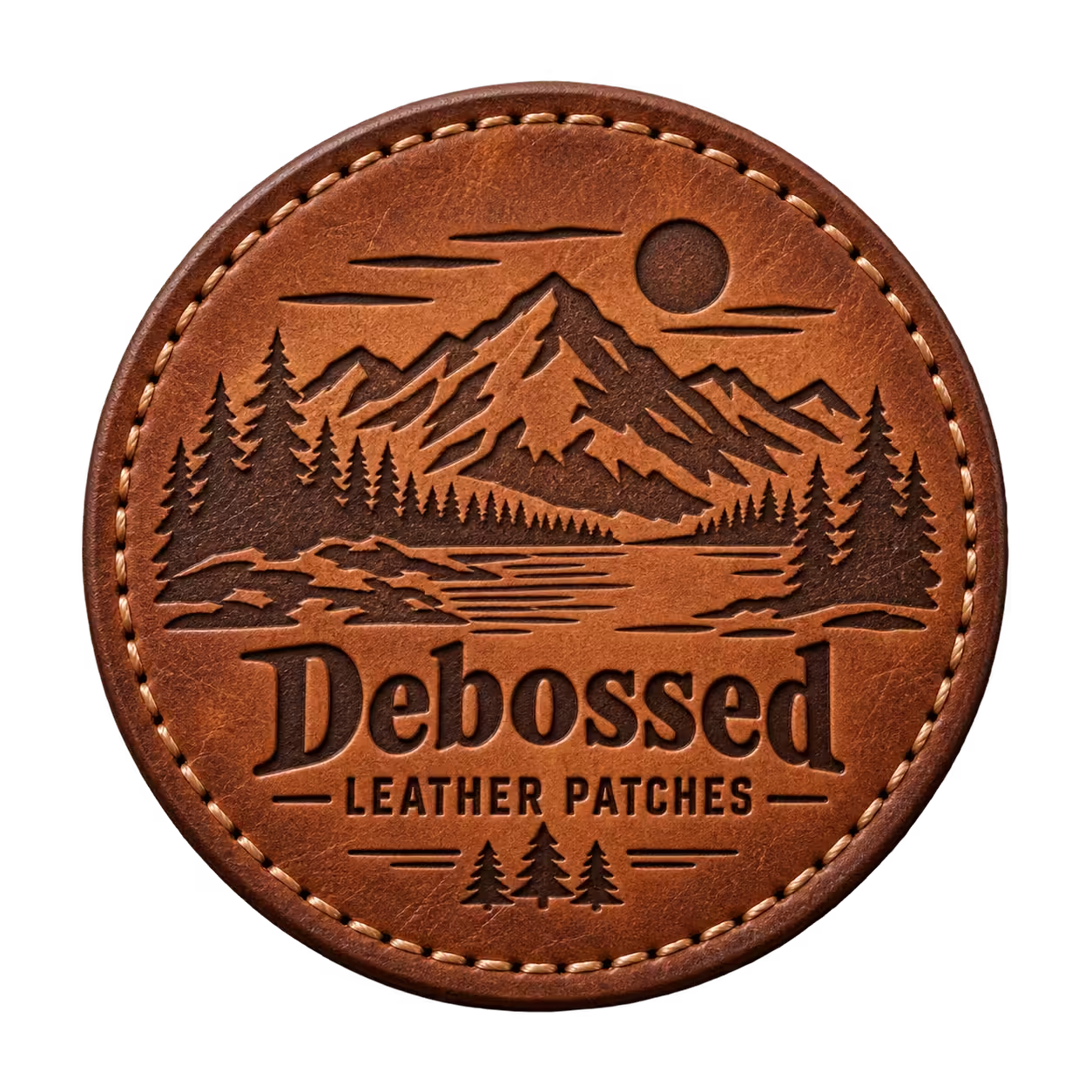
Debossing presses your design into the leather with a heated brass die. The recessed impression catches shadow, which makes the logo readable without ink. Debossing is the traditional leather patch finish and the most durable, because the mark is part of the hide rather than a layer on top of it. See debossed leather patches for tooling and artwork detail.
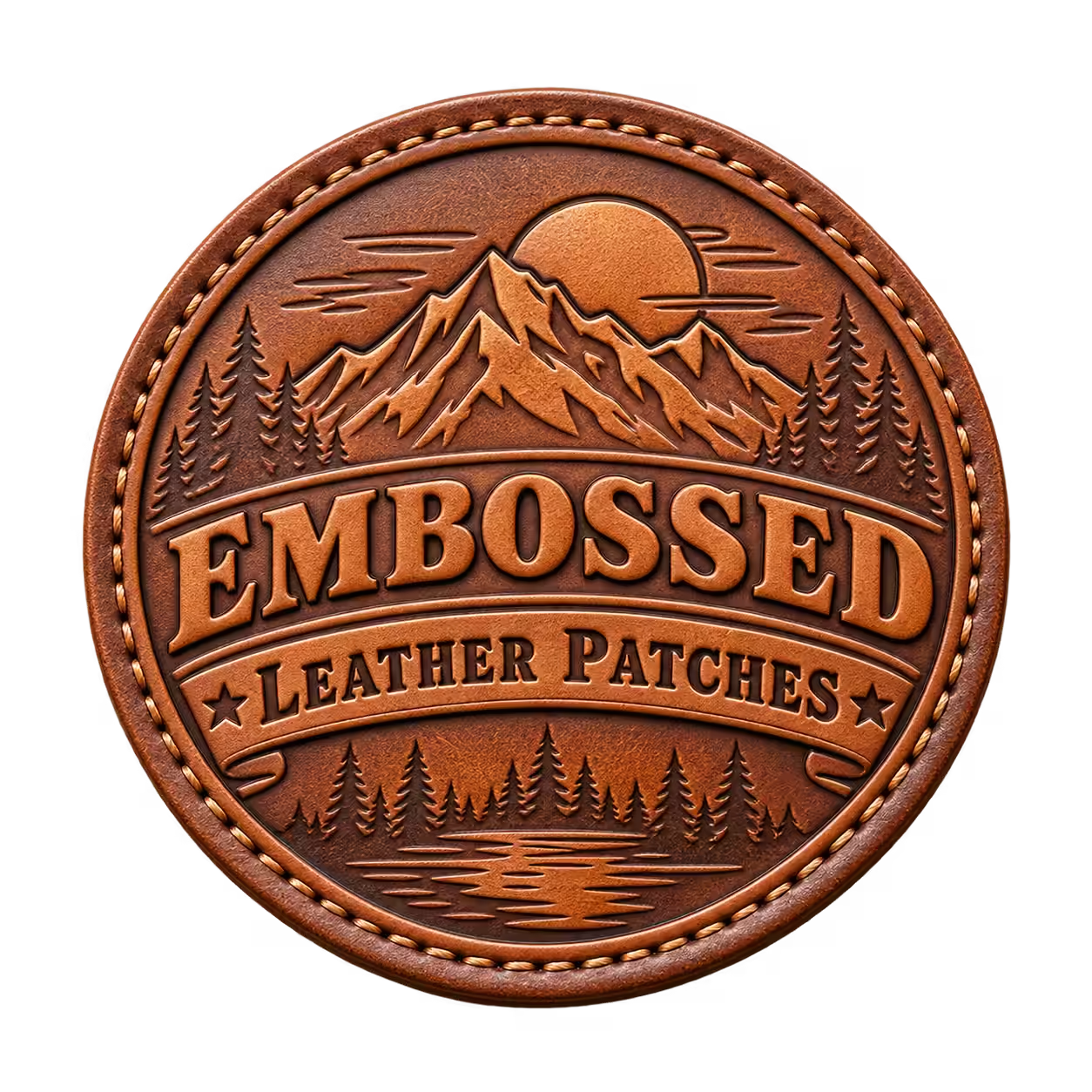
Embossed Leather Patches
Embossing raises your design above the surface using a reversed die. The raised logo adds a tactile, three-dimensional effect that reads well on bags and wallets. Embossing needs slightly thicker hide than debossing, so minimum leather thickness rises to 1.5 mm.
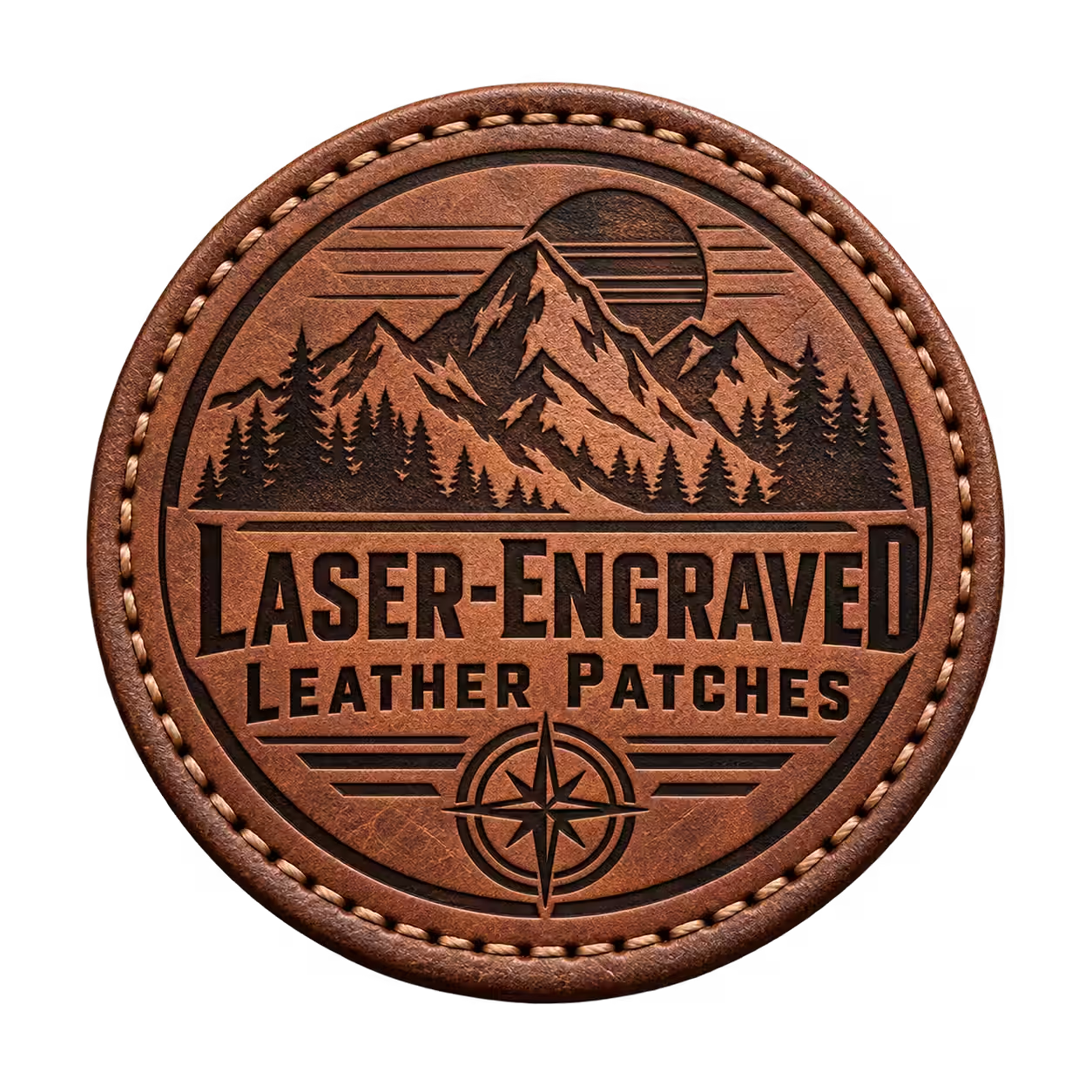
Laser-Engraved Leather Patches
Laser engraving burns the design into the surface with a focused CO₂ beam. The laser holds detail that a die cannot, which makes it the right choice for fine lines, small text and intricate crests. Engraving darkens the burnt area, so the logo carries tonal contrast as well as depth.
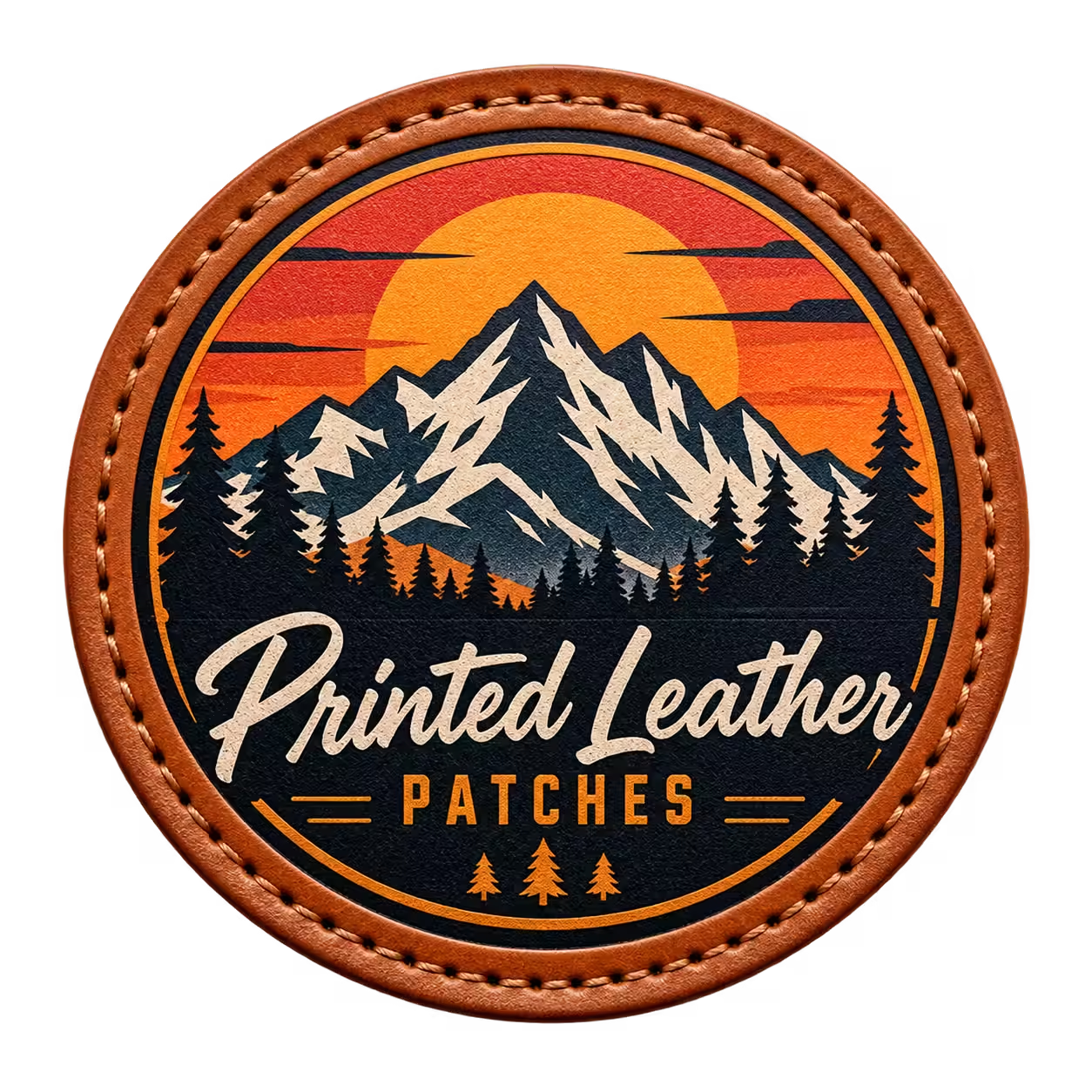
Printed Leather Patches
Printing applies full-colour artwork directly onto the leather face. Print reproduces gradients, photographs and multi-colour logos that no impression method handles. The trade-off is durability: printed ink wears faster than a pressed impression under abrasion.
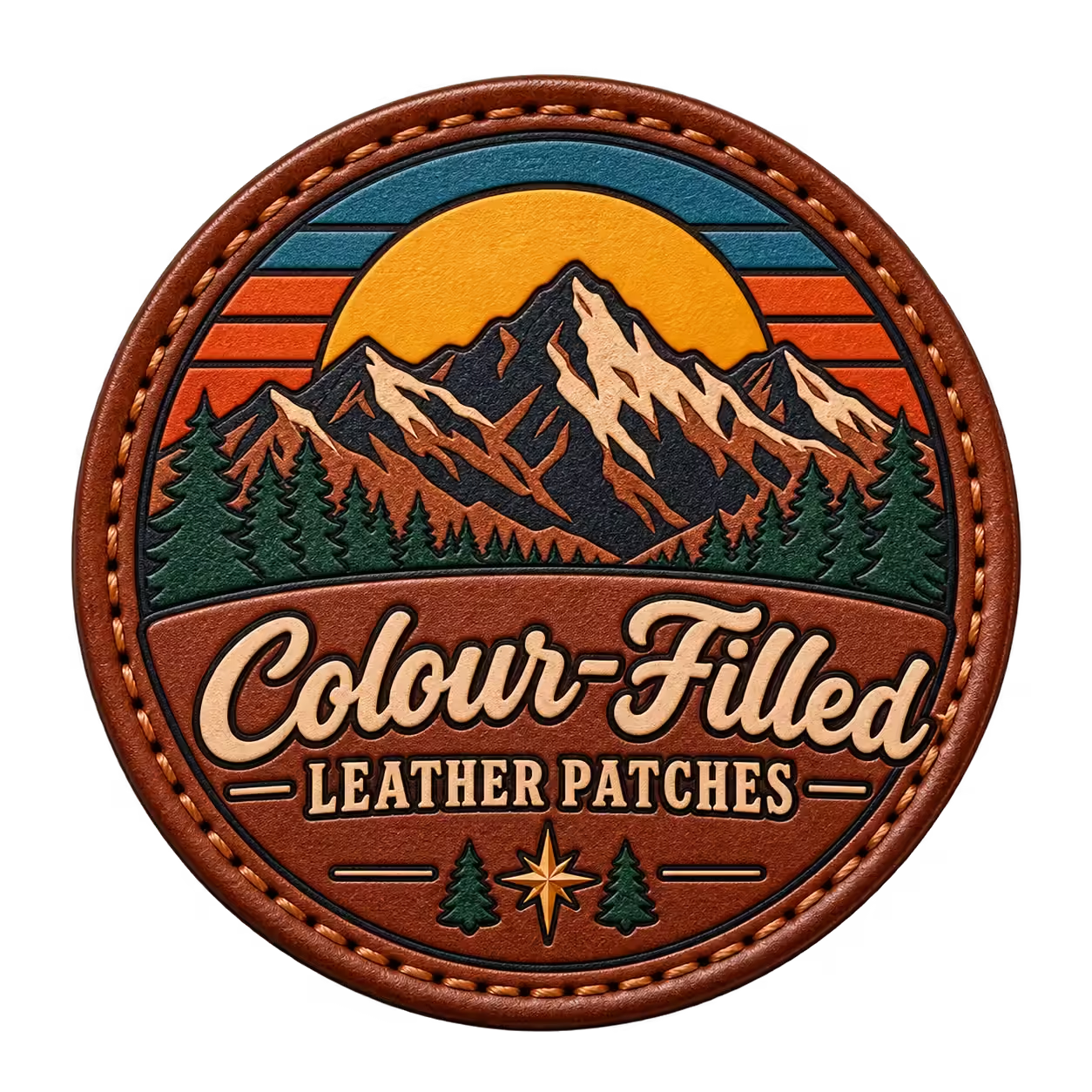
Colour-Filled Leather Patches
Colour filling combines two methods. The design is debossed or engraved first, then ink is filled into the recess. The result keeps the depth of a debossed patch and adds brand colour that sits below the surface, protected from rubbing.
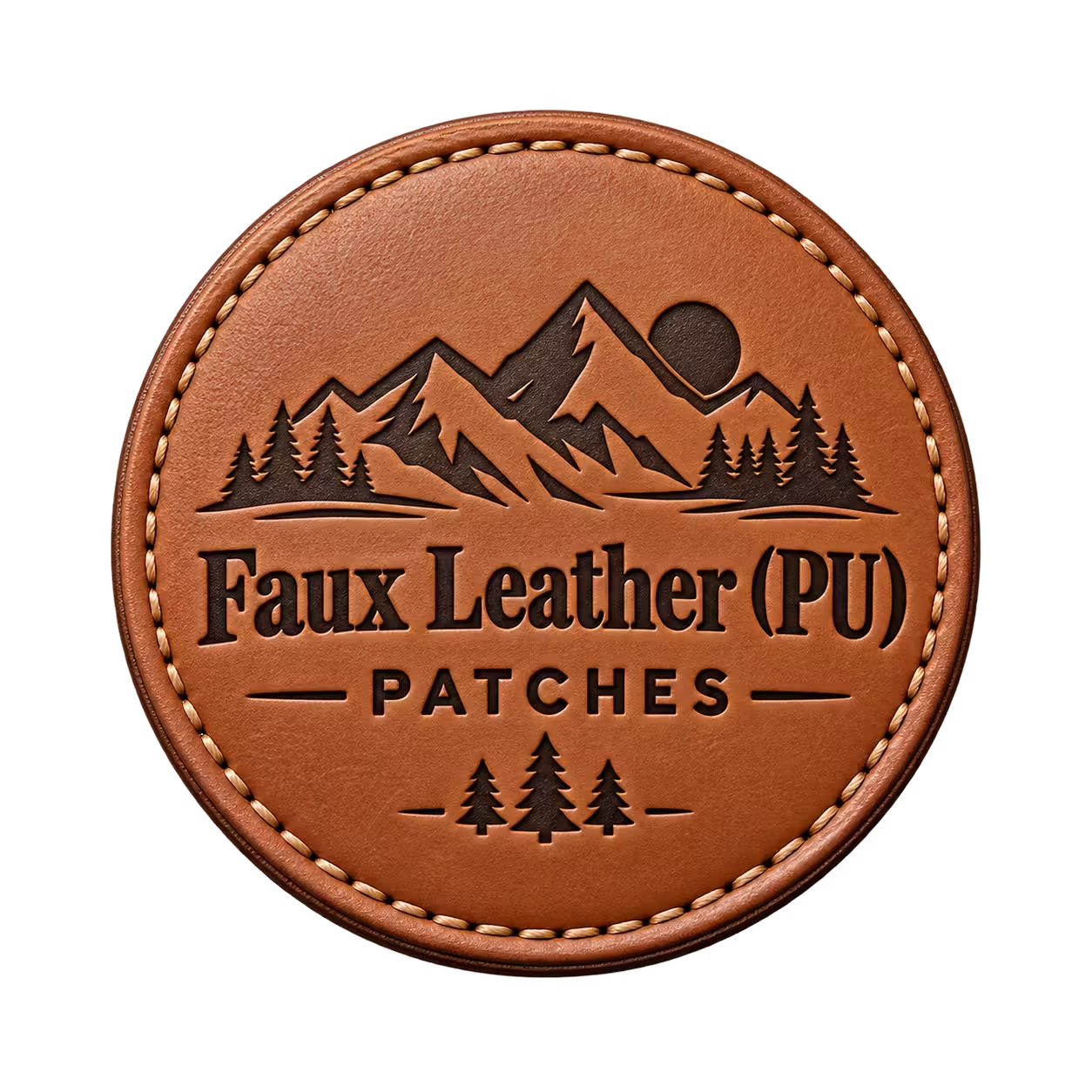
Faux Leather (PU) Patches
Faux leather patches take the same debossed, embossed and engraved finishes on a synthetic base. PU accepts heat-seal backing safely, so these patches apply with a heat press rather than a needle. Read more on faux leather patches.
Leather Patch Finishes Compared
| Finish | Design sits | Detail level | Colour | Best for |
|---|---|---|---|---|
| Debossed | Below surface | Medium | Tone-on-tone | Hats, jeans, workwear |
| Embossed | Above surface | Medium | Tone-on-tone | Bags, wallets, leather goods |
| Laser-engraved | Below surface, darkened | High | Tone-on-tone with contrast | Fine text, crests, small logos |
| Printed | On surface | High | Full colour | Multi-colour and photographic artwork |
| Colour-filled | Below surface, inked | Medium | One to three spot colours | Brand colour on a premium base |
How Custom Leather Patches Are Made
Production follows eight stages, and the whole sequence runs in 10 to 14 working days from artwork approval.
- Artwork supplied. You send a vector file (AI, EPS or PDF). Raster files work at 300 dpi or higher.
- Proof prepared. Our team converts the artwork to a patch layout and sends a digital proof with size, shape and leather colour marked.
- Die or laser file produced. Debossed and embossed orders need a brass die. Engraved orders need a vector path.
- Hide selected and cut. The leather is cut to your shape with a clicker press or a laser cutter.
- Design applied. The die presses the logo under heat and pressure, or the laser engraves it.
- Colour filled. Ink is applied to the recess on colour-filled orders and left to cure.
- Backing fitted. Sew-on, heat-seal, adhesive or hook-and-loop backing is applied to the reverse.
- Checked and dispatched. Each patch is inspected against the approved proof, then sent tracked across the UK.
Leather Patch Sizes, Shapes and Colours
Size, shape and colour are the three specifications you set before production. Each one changes the price and the placement options, so fix them at proof stage rather than after tooling.
Standard Sizes by Placement
Placement dictates size. A patch that works on a jacket back overwhelms a cap panel. These dimensions cover the common UK orders:
| Placement | Typical size | Notes |
|---|---|---|
| Cap front panel | 50 × 25 mm (2 × 1 in) | Wider than 75 mm curves on structured caps |
| Beanie cuff | 55 × 30 mm (2.2 × 1.2 in) | Sits flat on the fold |
| Jean waistband | 65 × 45 mm (2.6 × 1.8 in) | Sewn on all four edges |
| Chest or breast | 75 × 50 mm (3 × 2 in) | Standard workwear position |
| Sleeve | 50 × 50 mm (2 × 2 in) | Square or circular |
| Bag or backpack | 60 × 40 mm (2.4 × 1.6 in) | Front panel or strap |
| Jacket back | 200–300 mm (8–12 in) | Requires thicker hide and edge stitching |
Detail sets the floor on size. A logo with text below 8 pt loses definition when pressed into grain, so we scale the patch up or move the order to laser engraving.
Patch Shapes
Leather cuts cleanly in any outline. Standard shapes are rectangle, square, circle, oval, shield and rounded rectangle. Custom die-cut shapes follow the silhouette of your logo exactly, and laser cutting handles internal cut-outs that a press die cannot. Rounded corners outlast sharp ones, because square corners lift first under abrasion.
Leather Colours and Tan Shades
Leather colour comes from the tanning process, not from a printed layer. Standard shades are natural tan, mid tan, dark brown, black, burgundy and grey. Natural vegetable-tanned hide darkens with light and handling, so a natural tan patch ordered in January reads noticeably deeper by summer.
Exact Pantone matching behaves differently on hide than on twill. Dye penetrates the grain unevenly, which shifts the final tone by a shade or two across a batch. We match to the closest stock hide and send a physical swatch when colour accuracy drives the order. Faux leather removes the drift entirely and matches a Pantone reference reliably.
Backing and Attachment Options
Backing determines how the patch attaches and how permanent it is. Leather constrains the options more than twill does, because hide reacts to heat.
| Backing | Permanence | Applied by | Best for |
|---|---|---|---|
| Sew-on | Permanent | Machine or hand | Genuine leather on any garment |
| Heat-seal | Permanent | Heat press | Faux leather, caps, hard goods |
| Self-adhesive | Temporary | Peel and stick | Events, samples, promotional use |
| Hook-and-loop | Removable | Sewn loop panel | Workwear, tactical kit, swappable branding |
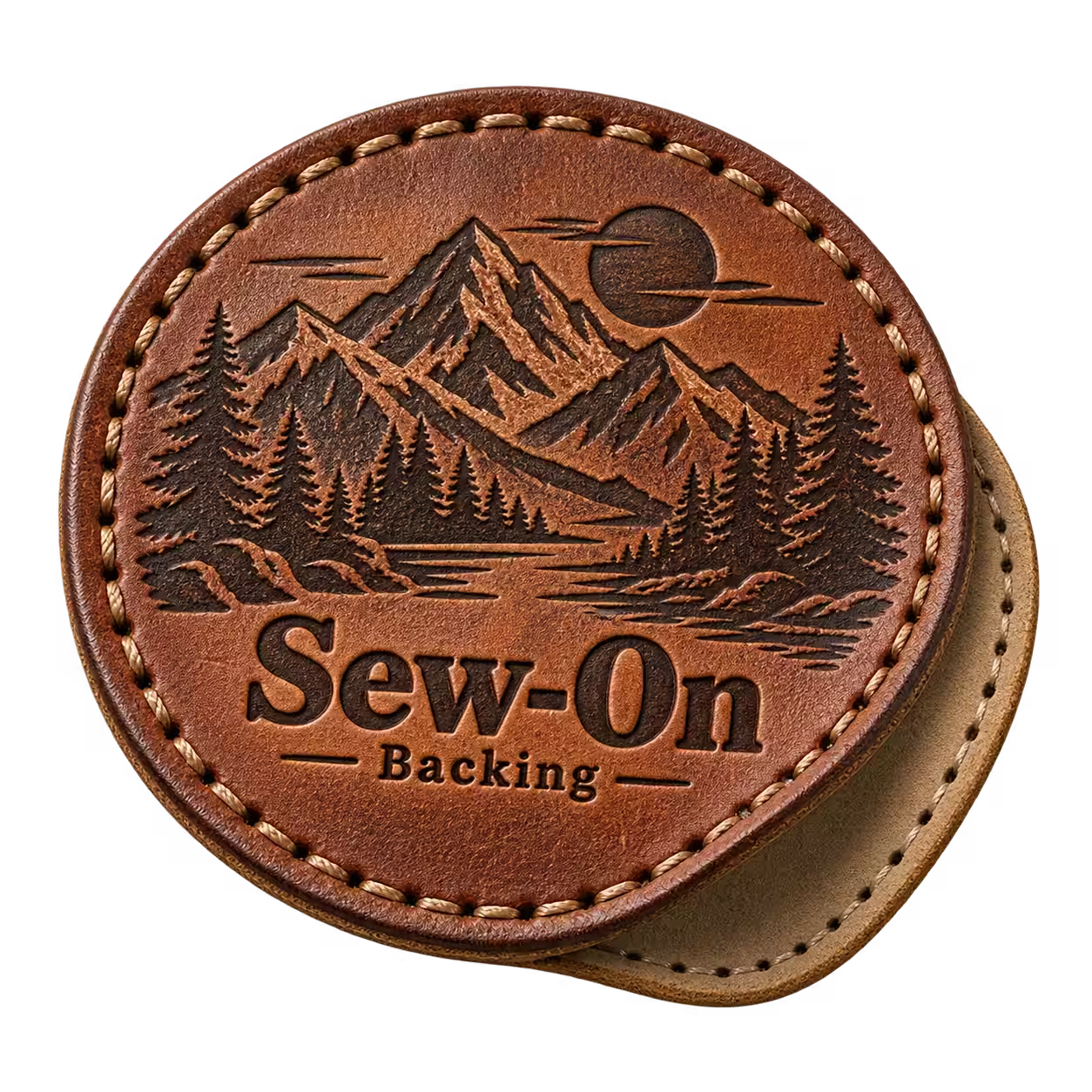
Sew-On Backing
Sew-on is the default for genuine leather and the strongest attachment available. The patch is stitched through all four edges or around the full perimeter with a heavy-duty needle and bonded polyester thread. Stitching survives industrial laundering, which is why workwear suppliers specify it.
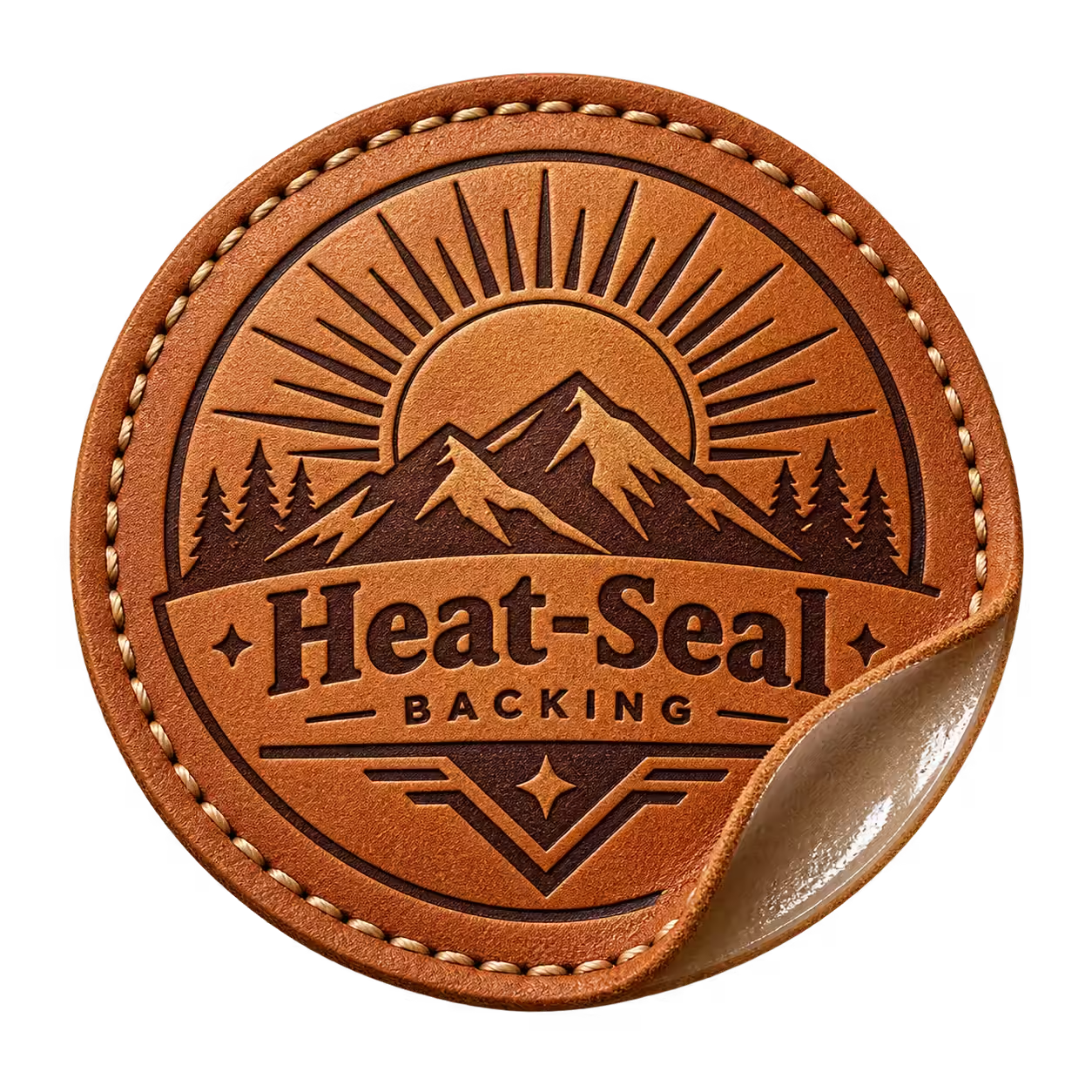
Heat-Seal Backing
Heat-seal backing carries a thermoplastic adhesive that melts under a press. Genuine leather scorches, shrinks and stiffens above roughly 120 °C, so we fit heat-seal backing to faux leather patches and to genuine hide only where the press temperature is controlled commercially. A domestic iron does not control it. Full application detail sits on how to attach leather patches.
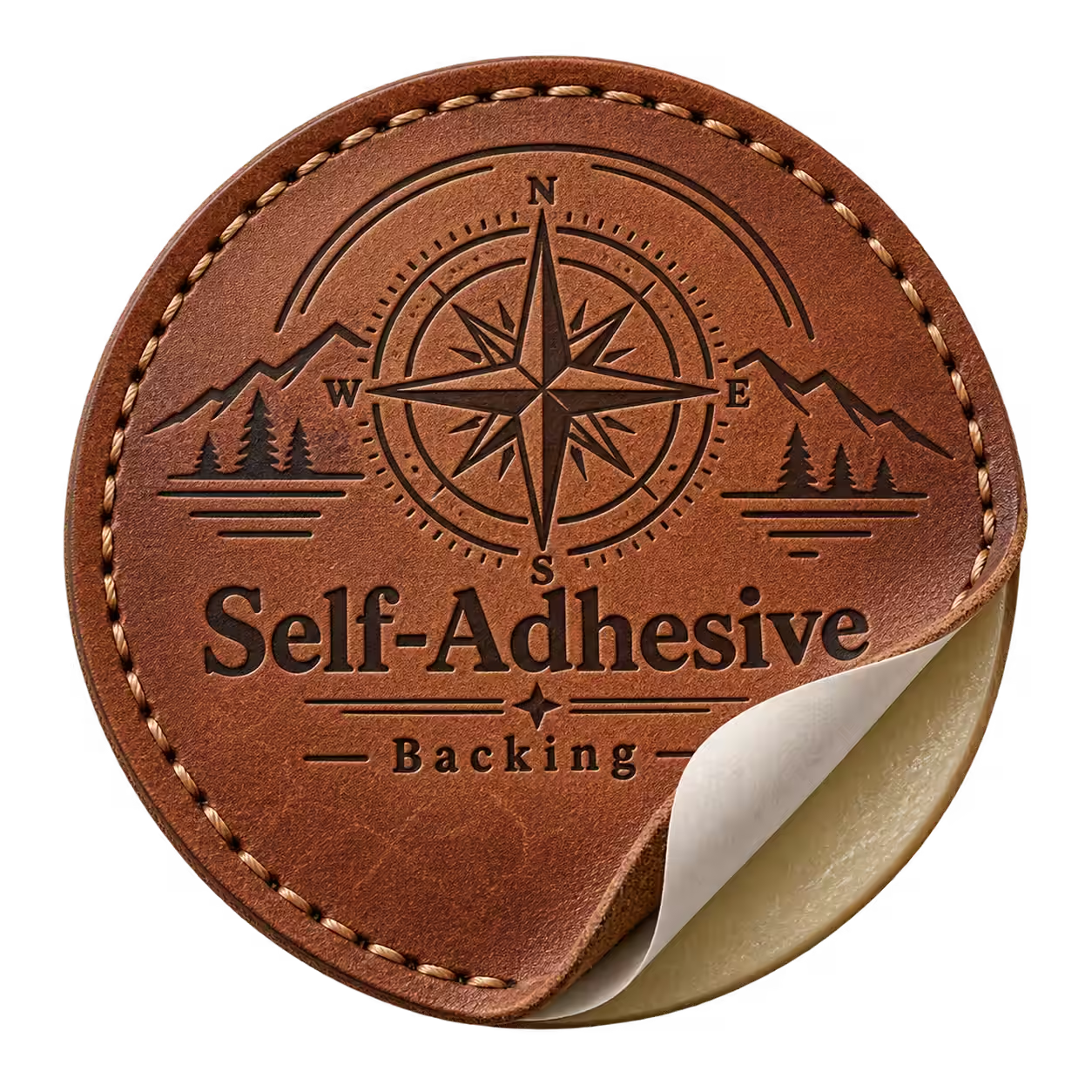
Self-Adhesive Backing
Self-adhesive backing uses a 3M peel-and-stick layer. The bond holds on smooth, hard surfaces and on fabric for short periods. Adhesive is a display and sampling option, not a garment solution.
Hook-and-Loop Backing
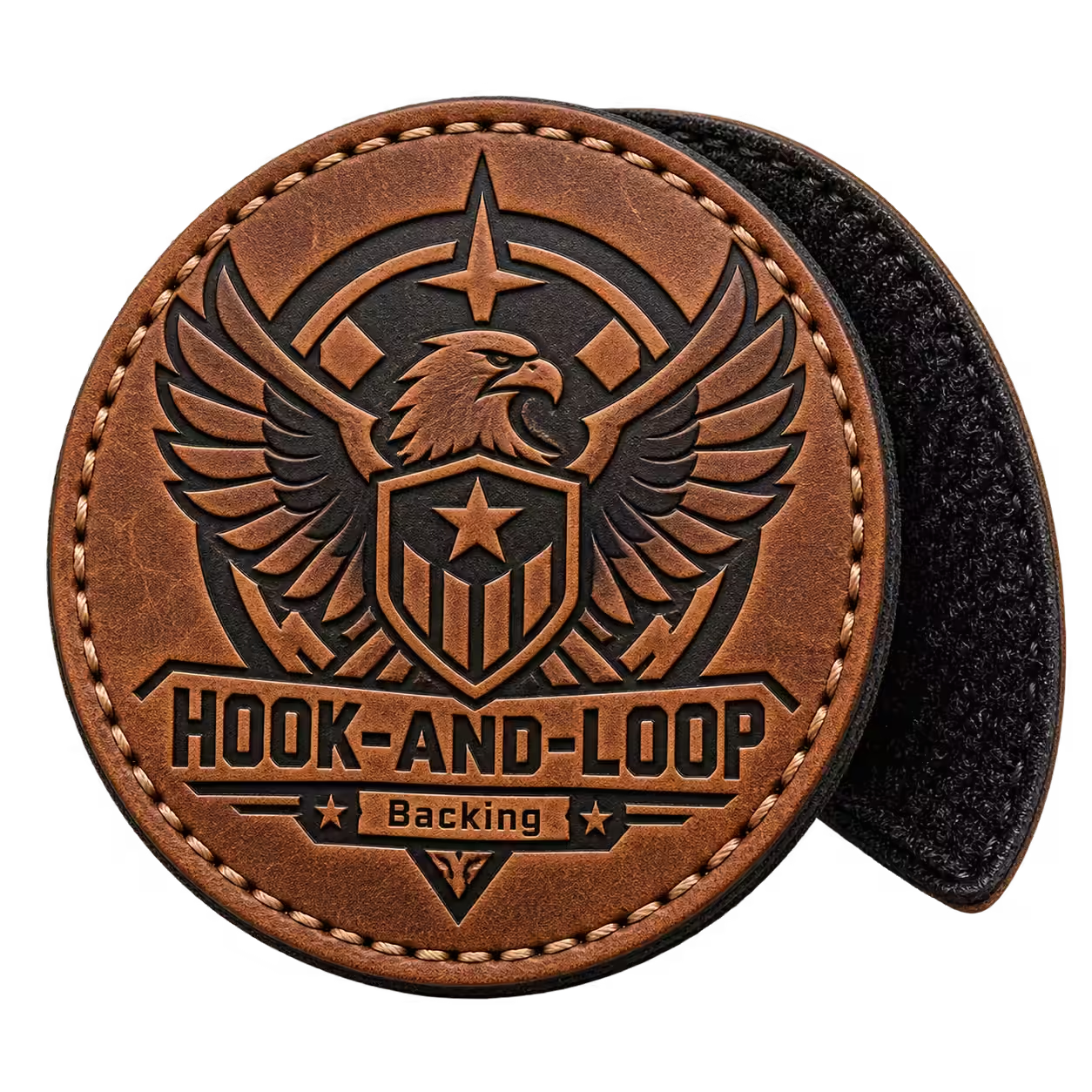
Hook-and-loop backing pairs a hook panel on the patch with a loop panel sewn to the garment. The patch lifts off and swaps in seconds, which suits uniforms that change by shift, site or client.
What Custom Leather Patches Are Used For
Hats and Caps
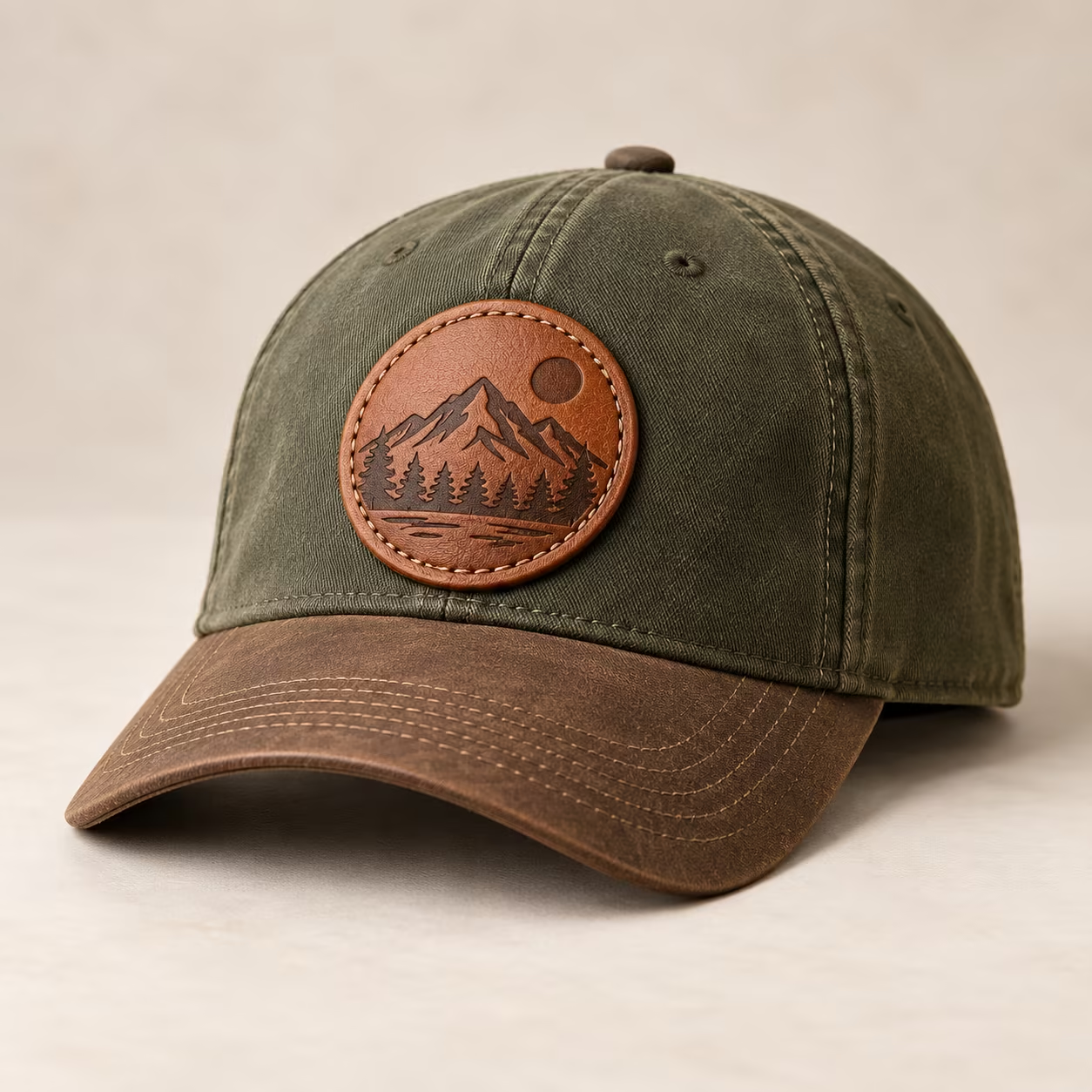
Leather patches are the most common branding method on trucker caps, snapbacks and beanies. A debossed tan patch on a five-panel cap gives a heritage look that print cannot replicate. The patch sits on the front panel above the seam, heat-sealed on faux leather or stitched on genuine hide.
Jeans and Denim Jackets
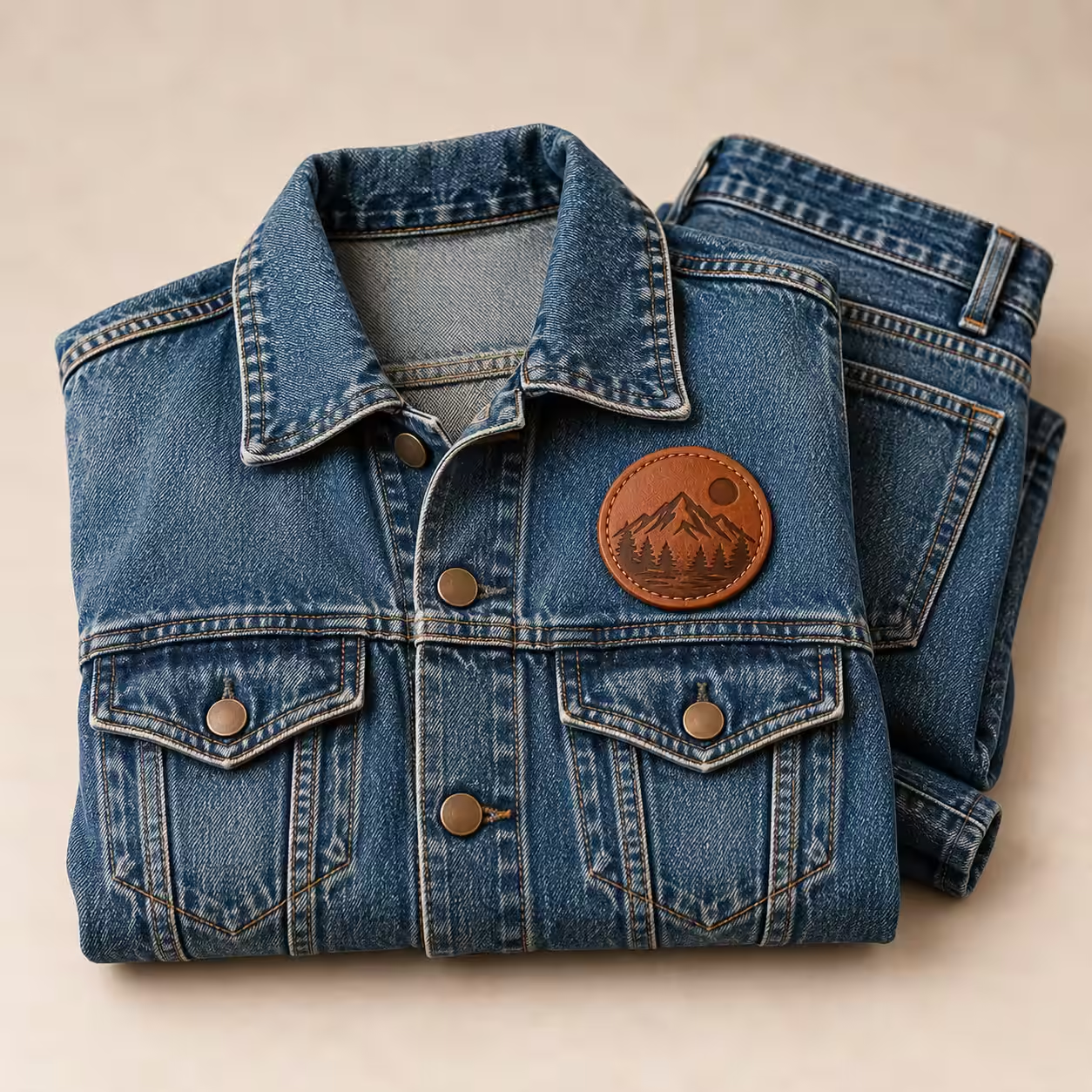
Denim brands fix leather patches to the rear waistband as the signature label. The patch takes the brand name, size and origin in one impression. Indigo dye and leather age at similar rates, so the label and the garment stay visually matched across years of wear.
Bags, Wallets and Leather Goods
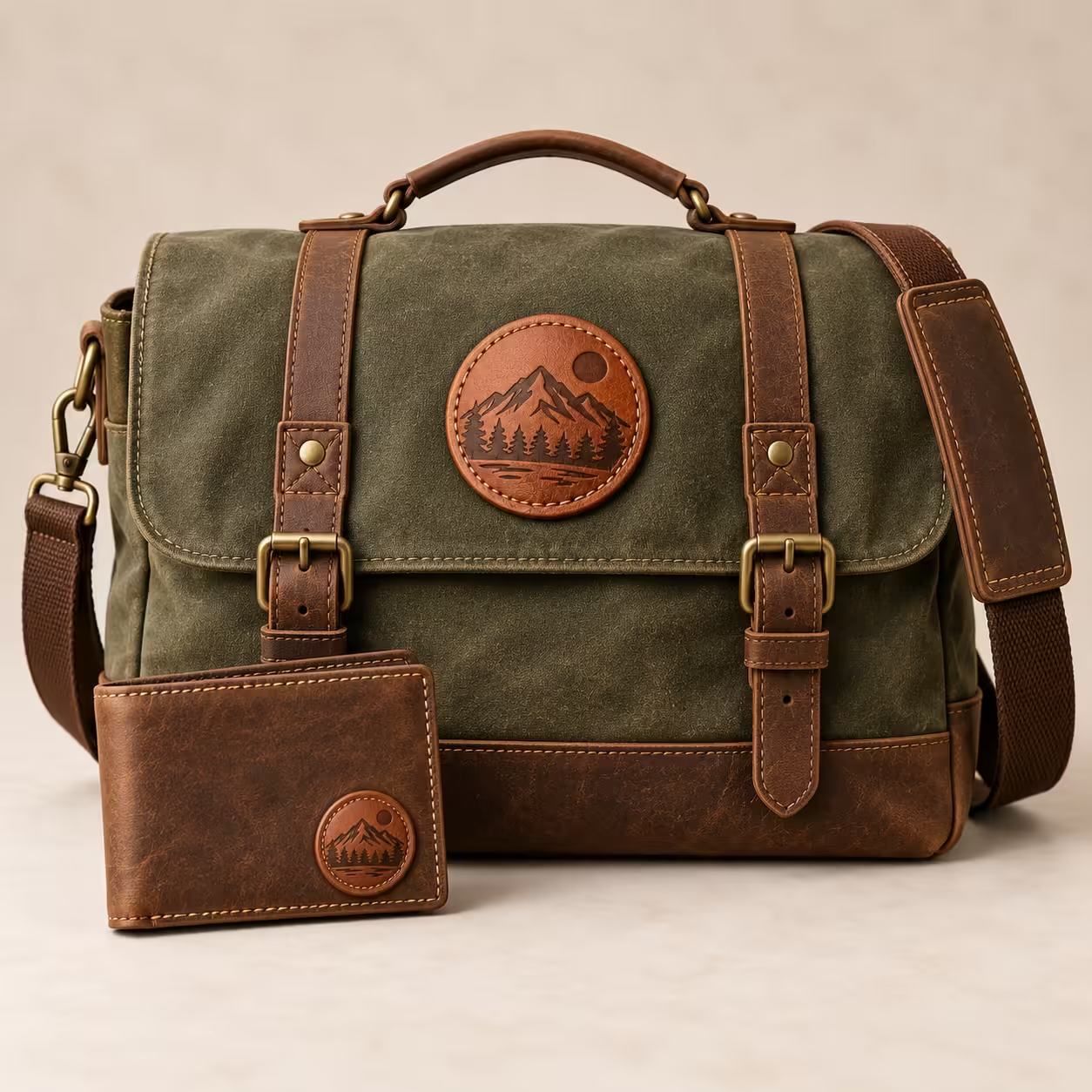
Embossed leather patches label backpacks, holdalls and wallets. A raised logo on a matching hide reads as part of the construction rather than an addition, which is why luggage makers choose embossing over print.
Workwear and Uniforms
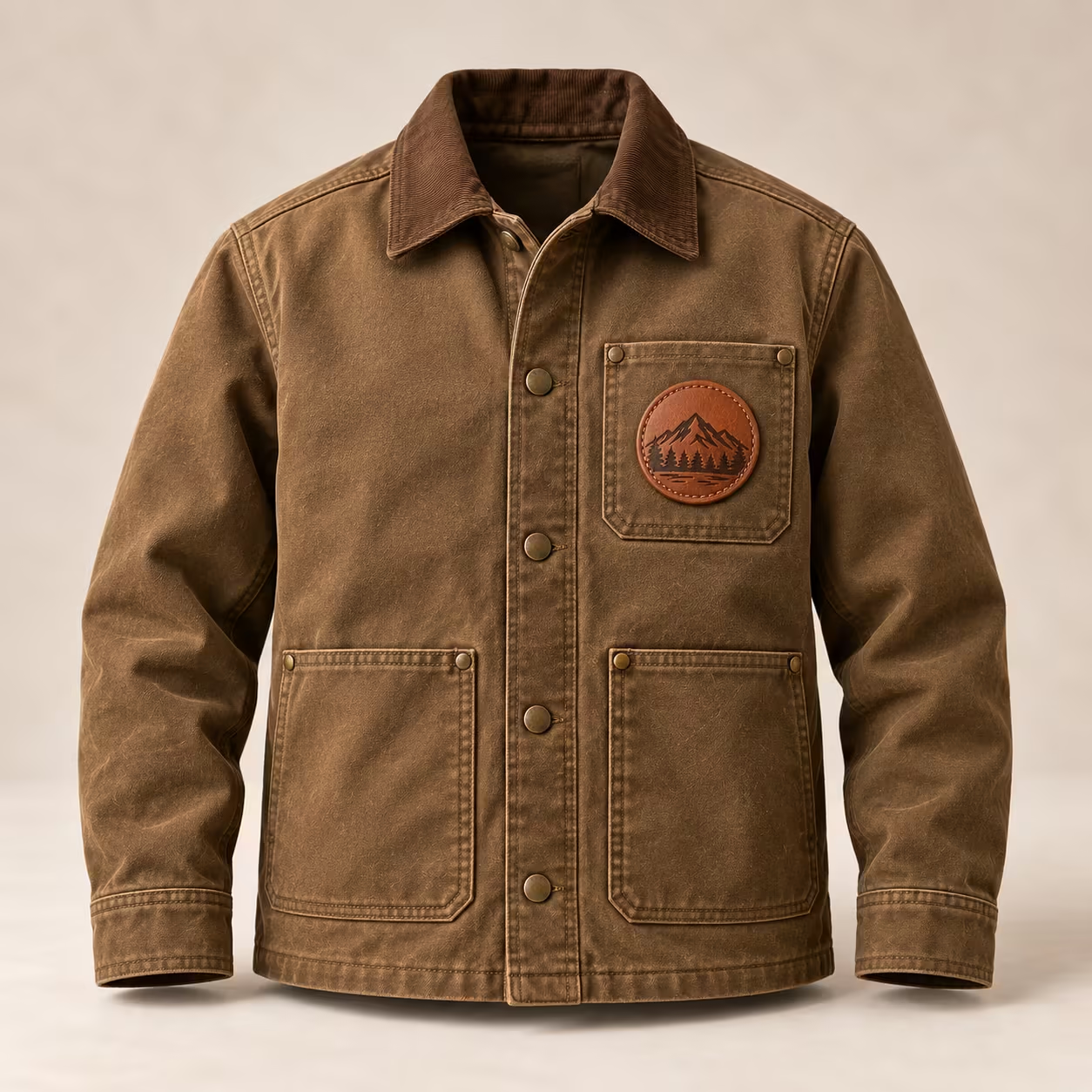
Workwear suppliers use sew-on leather patches for name badges, trade marks and company logos on aprons, tool belts and heavy jackets. Leather tolerates repeated industrial washing better than printed transfers.
Clothing Brands and Garment Labels
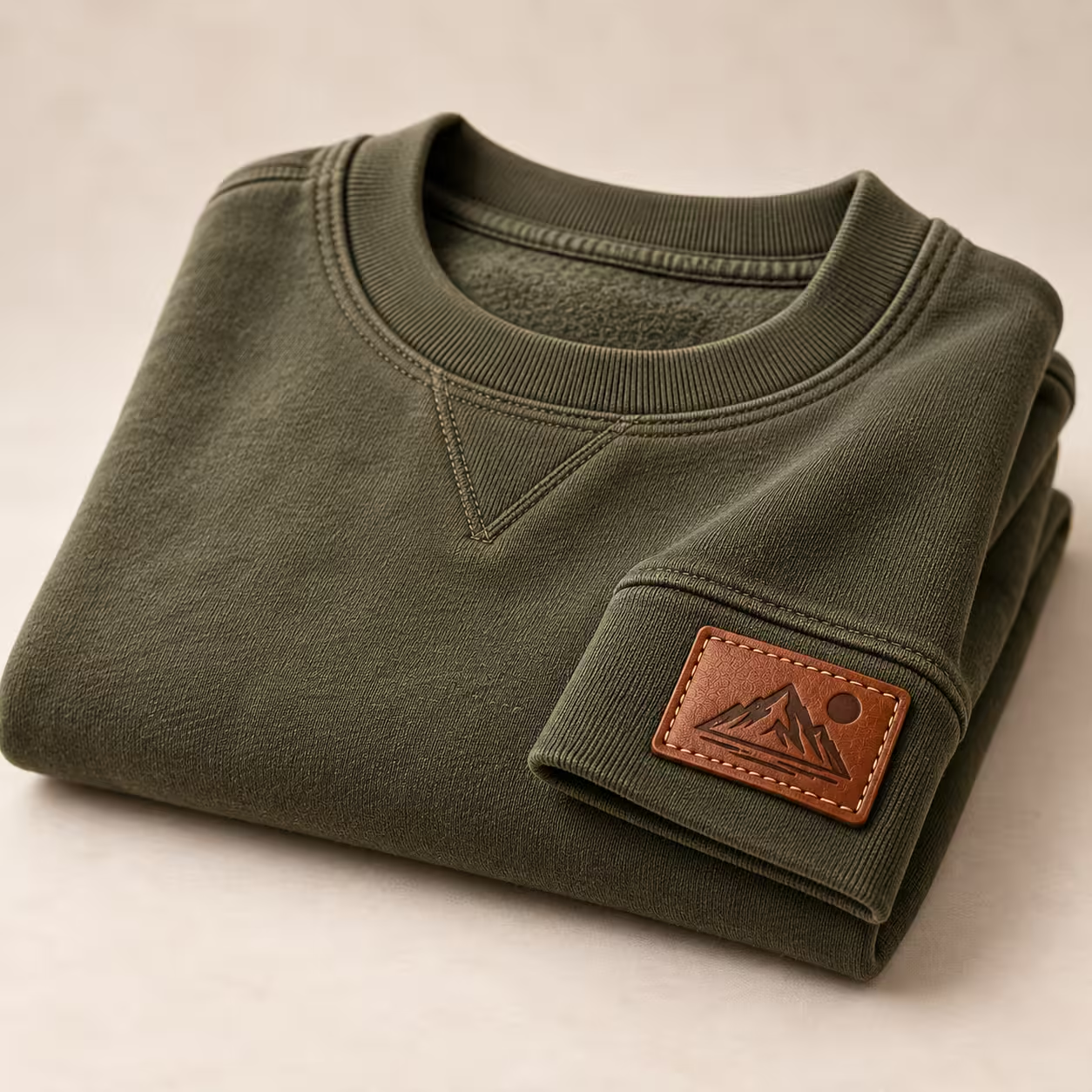
Independent UK labels use leather patches as the main brand mark on hoodies, overshirts and outerwear. A single patch replaces a woven neck label, a hem tag and a printed logo, which reduces the number of suppliers in the chain.
Leather Patches vs Other Patch Types
| Attribute | Leather | Embroidered | Woven | PVC |
|---|---|---|---|---|
| Material | Tanned hide or PU | Thread on twill | Fine thread weave | Moulded rubber |
| Finish | Pressed impression | Raised stitching | Flat woven detail | 2D or 3D relief |
| Colour range | One to three tones | Up to 12 thread colours | High colour count | Full colour, Pantone matched |
| Detail level | Medium to high | Medium | Very high | High |
| Texture | Grained, softens with wear | Textured, thick | Smooth, thin | Rubberised, waterproof |
| Durability | Scuffs, does not fray | Frays at edges over time | Frays less than embroidery | Waterproof, colour-fast |
| Washability | Wipe clean, avoid soaking | Machine washable | Machine washable | Machine washable |
| Best for | Caps, denim, bags, premium branding | Uniforms, clubs, jackets | Small detailed logos, labels | Outdoor kit, tactical gear |
Leather wins on perceived value and texture. Embroidery wins on colour count and laundering. PVC wins outdoors. Choose leather when the patch has to signal quality and survive wear rather than survive a 60 °C wash cycle.
How to Order Custom Leather Patches in the UK
Ordering runs through five stages, and you approve the design before any leather is cut.
Artwork Requirements
Vector artwork produces the cleanest impression. Supply AI, EPS, SVG or vector PDF files with text converted to outlines. Raster files work at 300 dpi or higher on a transparent background. We redraw low-resolution logos free of charge where the original file is unavailable.
Leather holds less fine detail than twill. Strokes below 0.5 mm close up under die pressure, so we thicken hairlines at proof stage and flag any element that will not read.
Minimum Order Quantity
Our minimum order is 10 patches per design. Low minimums let new brands test a label before committing to a production run, and tooling retention and any repeat-order charges are confirmed in your quotation.
Turnaround Time and UK Delivery
Standard production takes 10–14 working days from proof approval. Express production completes in 5–7 working days where the schedule allows. Delivery adds 1–2 working days by tracked courier to any UK address, including the Highlands, Northern Ireland and BFPO addresses.
What Affects the Price
Six variables set the unit price:
- Quantity — unit cost falls sharply above [100] pieces
- Size — price scales with surface area, not perimeter
- Leather type — full-grain costs more than top-grain; faux leather costs least
- Finish — debossing and embossing share tooling costs; laser engraving prices per second of run time
- Backing — sew-on and plain backing are standard; hook-and-loop and heat-seal add a small unit cost
- Tooling — a one-off die charge applies to the first order of each design
How to Attach and Care for Leather Patches
 From placement to permanent finish
Attaching a Leather Patch
Sew-on patches: position the patch, secure it with fabric clips rather than pins, and stitch 2 mm inside the edge using a size 100/16 leather or denim needle with bonded polyester thread. Pins leave permanent holes in hide, so clips matter.
Heat-seal patches on faux leather: press at [140 °C] for 15 seconds with a silicone pad between the press and the patch, then let the patch cool fully before handling.
Hook-and-loop patches: sew the loop panel to the garment once, then swap patches freely.
 Keep the grain looking its best
Caring for Leather Patches
Leather care is subtractive — the less you do to it, the longer it lasts.
- Wash garments inside out at 30 °C and avoid extended soaking
- Never tumble dry a garment carrying a genuine leather patch; heat dries the hide and cracks the surface
- Wipe the patch with a dry cloth to remove surface dirt, and use a leather conditioner sparingly once or twice a year
- Keep solvents, bleach and dry-cleaning fluid away from the patch
- Expect the colour to deepen with sunlight and handling — patina is the material working as intended
Customer Feedback
Custom Leather Patches for Caps
“The leather patches turned out exactly how we wanted. The logo looks sharp, the material feels premium, and the stitching sits perfectly on our caps. Really pleased with the overall quality.”
London, UK
Leather Patches for Workwear
“We ordered custom leather patches for our workwear, and the finish was excellent. The team was helpful throughout the ordering process, and the patches look professional on our uniforms. Great attention to detail.”
Manchester, UK
Custom Leather Labels for Clothing
“Very happy with our custom leather labels. The debossed logo looks clean, the leather has a lovely texture, and the patches give our clothing a much more premium feel. Would definitely order again.”
Birmingham, UK
Custom Leather Patch FAQs
Are leather patches iron-on?
No. Genuine leather scorches, shrinks and stiffens under a domestic iron, so sew-on backing is the correct choice for real hide. Faux leather patches take heat-seal backing safely under a controlled commercial press.
Can you make leather patches without animal leather?
Yes. Faux leather patches are made from polyurethane-coated fabric and take the same debossed, embossed and engraved finishes as genuine hide.
Do leather patches last longer than embroidered patches?
Yes, under abrasion. Leather scuffs and softens where embroidery frays at the border, though embroidered patches tolerate repeated hot washing better.
Can you match my brand colour exactly on leather?
No, not on genuine hide. Dye penetrates natural grain unevenly, so we match to the nearest stock shade and send a physical swatch. Faux leather matches a Pantone reference accurately.
Is there a minimum order for custom leather patches?
Yes. Our minimum is 10 patches per design, with the unit price falling as quantity rises.
Are your leather patches made in the UK?
Yes. Our custom leather patches are made in the UK and dispatched with tracked delivery.
How long does a custom leather patch order take?
Standard orders complete in 10–14 working days from proof approval, plus 1–2 days for tracked delivery.
Order Your Custom Leather Patches
A leather patch turns a garment into a branded product. The material carries your logo as depth rather than colour, ages alongside the item it sits on, and signals quality before anyone reads the name. Debossing suits caps and denim, embossing suits bags and leather goods, and laser engraving handles the detail neither die can hold.
Send us your logo and the size you need. We will quote the job, prepare a free digital proof, and make your patches in the UK.
Request a quote free artwork proof, low minimums, tracked UK delivery.