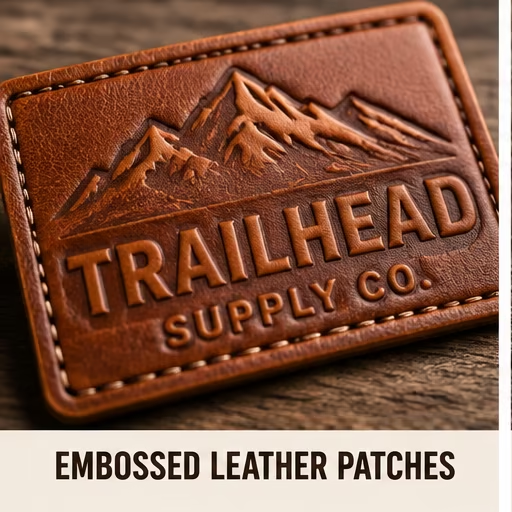
Embossed Leather Patches
Embossed leather patches display a logo raised above the surrounding leather surface. The relief creates a tactile mark for bags, wallets and clothing labels, with the final shape depending on leather body, tooling and the space around the artwork.
On this page · 13 sections
- What Are Embossed Leather Patches?
- How Embossing Raises a Leather Design
- Best Leather for Embossed Patches
- Artwork Rules for Embossing
- Colours and Finishes
- Backing Options
- Best Uses
- Durability and Care
- Embossed vs Debossed Leather Patches
- Embossed vs Engraved Leather Patches
- How to Order
- FAQs
- Turn the details into a clear specification
What Are Embossed Leather Patches?
An embossed leather patch uses raised relief to distinguish a logo from its background. Light catches the upper surface and edges, so the mark can remain tonal while still standing out. Embossing is a finish, not a separate leather grade.
How Embossing Raises a Leather Design
Embossing shapes the material with tooling designed around the raised and recessed areas. Pressure and substrate behaviour establish the relief. A thick patch does not automatically produce a good result; the leather must also form cleanly and retain the intended shape.
Die construction
Tooling defines which parts of the design rise and which remain lower. A clear artwork map prevents confusion between relief, background and border.
Pressure
Pressure shapes a compatible surface under controlled conditions. The required process follows the material and tooling rather than a universal setting.
Leather thickness
Thickness contributes body and changes flexibility. Include backing layers when assessing the finished patch on a curved or moving product.
Best Leather for Embossed Patches
Suitable embossing leather has enough body to support relief and enough compliance to form it. Grain and coatings affect the appearance of the raised edge. Judge the selected stock with the actual design instead of choosing by thickness alone.
Artwork Rules for Embossing
Embossed artwork needs open gaps around raised features. Broad letters and simple symbols are easier to separate than thin outlines and dense text. Leave room between the raised design, any border and the attachment area so those features remain visually distinct.
Line width
Line width must be assessed for the chosen finish and stock. Check narrow gaps as well as strokes, since either can lose definition in production.
Small text
Small text needs open counters, useful spacing and enough contrast. Inspect the actual words at finished size instead of judging an enlarged proof.
Raised borders
A raised border needs separation from the central artwork and stitch route. Define whether it is decorative or part of the attachment design.
Colours and Finishes
Embossed patches can use a tonal leather shade or compatible additional colour. The base material changes how strongly the relief catches light. Request a representative material reference before selecting a shade from a screen image.
Backing Options
Backing selection follows the product receiving the patch. A sew-on border needs a clear margin around the relief; a removable construction adds overall thickness. Any heat-applied system must be assessed for its effect on both the surface and raised design.
Best Uses
Embossing suits logos intended to be felt as well as seen. A bag panel or wallet label can provide a stable setting for a raised mark. Smaller clothing labels need a simplified design to avoid turning relief into visual clutter.
Bags
A bag patch should sit on a visible panel with suitable attachment access. Check the filled shape and avoid repeated folds or strap abrasion.
Wallets
Wallet branding needs a compact emblem that does not interfere with folds or pockets. Check the product closed and in normal use before setting placement.
Premium clothing
A refined clothing emblem depends on proportion, material and clean detail. Let the patch support the garment rather than crowding it with unnecessary information.
Labels
Clothing labels need a readable brand mark in the available placement area. Keep care compatibility and any separate product information requirements in the specification.
Durability and Care
Raised leather features can rub against neighbouring surfaces. Keep the emblem away from regular scraping where possible and clean according to the material specification. A worn upper edge changes the look of embossing differently from a recessed mark.
Embossed vs Debossed Leather Patches
Embossing raises the logo; debossing presses it into the surface. Choose relief when touch and dimension are central to the design, or a recess when a quieter mark suits the product. Neither finish makes the underlying leather washable by itself.
Embossed vs Engraved Leather Patches
Embossing prioritises relief, while engraving prioritises a surface mark following digital artwork. Detailed crests may need simplification for embossing. Review an engraved option when preserving fine internal lines matters more than creating a raised logo.
How to Order
An embossed patch enquiry should include artwork, dimensions, material, quantity, placement and backing. Identify whether the logo, border or both should be raised. Ask for a clear proof showing the intended relief areas before tooling is agreed.
FAQs
Is embossing raised or recessed?
Embossing creates raised relief. Debossing places the mark below the surrounding surface.
Can an embossed patch sit on a curved cap?
It can be assessed, but the total thickness and relief must follow the crown. Check a physical fit on the selected cap.
Does thicker leather always emboss better?
No. Formability, surface finish and tooling matter alongside thickness.
Turn the details into a clear specification
Send your logo, dimensions and quantity with the finish choices discussed above. Include the receiving product and any wash or delivery requirements so the quotation can address your intended use.