Debossed vs Embossed Leather Patches
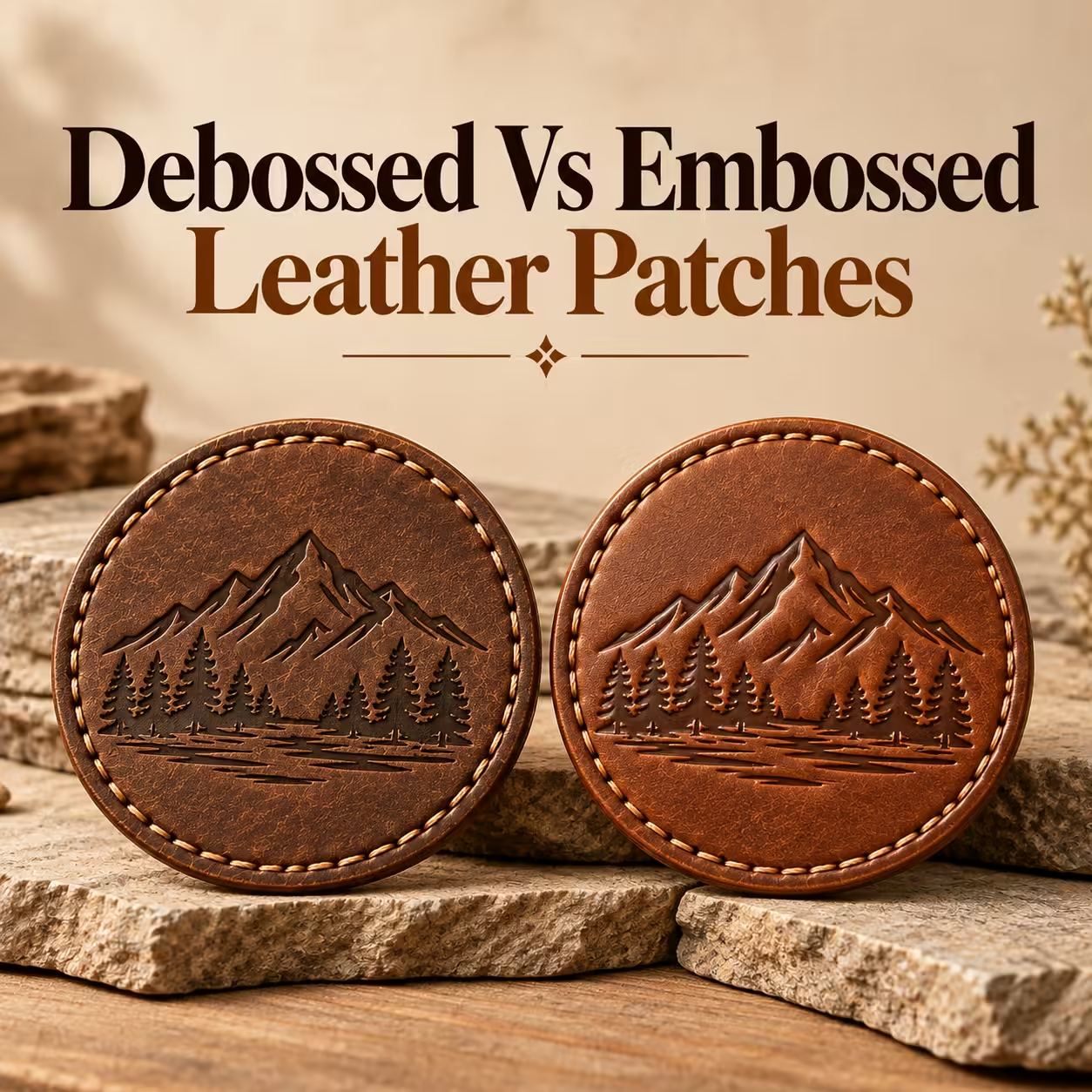
Debossing presses a logo below the leather surface; embossing raises the design above its surroundings. Choose debossed patches for a recessed tonal mark or embossed patches for more prominent relief, then confirm that the material, artwork and placement support the effect.
Debossed vs Embossed: Quick Comparison
The main difference is surface direction: debossed artwork is recessed and embossed artwork is raised. Both depend on tooling and a suitable material. The comparison table separates their visual effects from factors that require a design-specific assessment.
| Attribute | Debossed | Embossed |
|---|---|---|
| Logo direction | Below surrounding face | Above surrounding face |
| Visual effect | Recess and shadow | Raised edges catch light |
| Artwork priority | Open recessed shapes | Separated raised features |
| Material check | Clean retained impression | Body and formability |
| Wear consideration | Recess can soften with use | Raised features meet rubbing surfaces |
| Price basis | Design, stock, tooling and quantity | Design, stock, tooling and quantity |
How the Surface Differs
A recessed logo gathers shadow within the mark, while raised relief catches light along its upper edges. That changes how the same artwork reads from different angles. Judge both under normal lighting rather than only a dramatically lit product photograph.
Tooling and Production
Both finishes require tooling appropriate to the design and material. Tool geometry determines which areas are formed and how the edges transition. Setup and sample requirements vary, so request a quote for the actual finish rather than assuming identical production costs.
Leather Thickness
Thickness contributes body, but leather response and logo geometry also affect relief. An embossed design may need more support than a shallow recessed mark. The complete patch must still bend appropriately for its placement and attachment.
Logo Detail
Logo detail depends on stroke width, gaps and scale for either method. A small raised line and a small recessed counter present different forming challenges. Compare the actual logo at its final dimensions and simplify any feature that loses clarity.
Durability
Both finishes wear with the leather. Raised elements meet surrounding surfaces more directly, while recesses can soften through abrasion and material change. Neither process establishes a fixed lifespan or removes the need for suitable cleaning.
Best for Hats
For hats, a clear recessed logo can suit compact tonal branding. Embossing can also work when the material and relief remain flexible enough for the crown. Patch fit and readability should decide the choice rather than the hat category alone.
Best for Bags
For bags, raised relief can provide a tactile brand mark on a stable panel. Debossing can produce a quieter emblem that follows the same material palette. Consider the panel’s exposure to straps, clothing and other rubbing surfaces.
Best for Jeans and Labels
For jeans and small labels, a recessed wordmark can keep the design simple within a low profile. Embossed versions need enough area for raised letters to separate. Either choice must suit the garment’s washing and waistband construction.
Cost Considerations
Cost depends on tooling, material, quantity and the complexity of the formed design. Compare like-for-like specifications and check setup charges separately. A finish label alone is not enough to predict which quote will be lower.
Which Should You Choose?
Choose debossing when a recessed impression matches the brand and placement; choose embossing when raised dimension is central. If fine linework is the priority, compare engraving too. Approve the result on the chosen material rather than deciding from terminology alone.
FAQs
Which finish is recessed?
Debossing is recessed; embossing is raised.
Which finish is cheaper?
Compare quotes for the actual material, artwork, quantity and tooling. The finish name alone does not establish cost.
Can either finish be used on faux leather?
Compatible stock can be assessed for both. Confirm the specific construction and result.
Turn the details into a clear specification
Send your logo, dimensions and quantity with the construction choices discussed above. Include the receiving product and any wash or delivery requirements so the quotation can address your intended use.