Leather Patch Thickness Guide
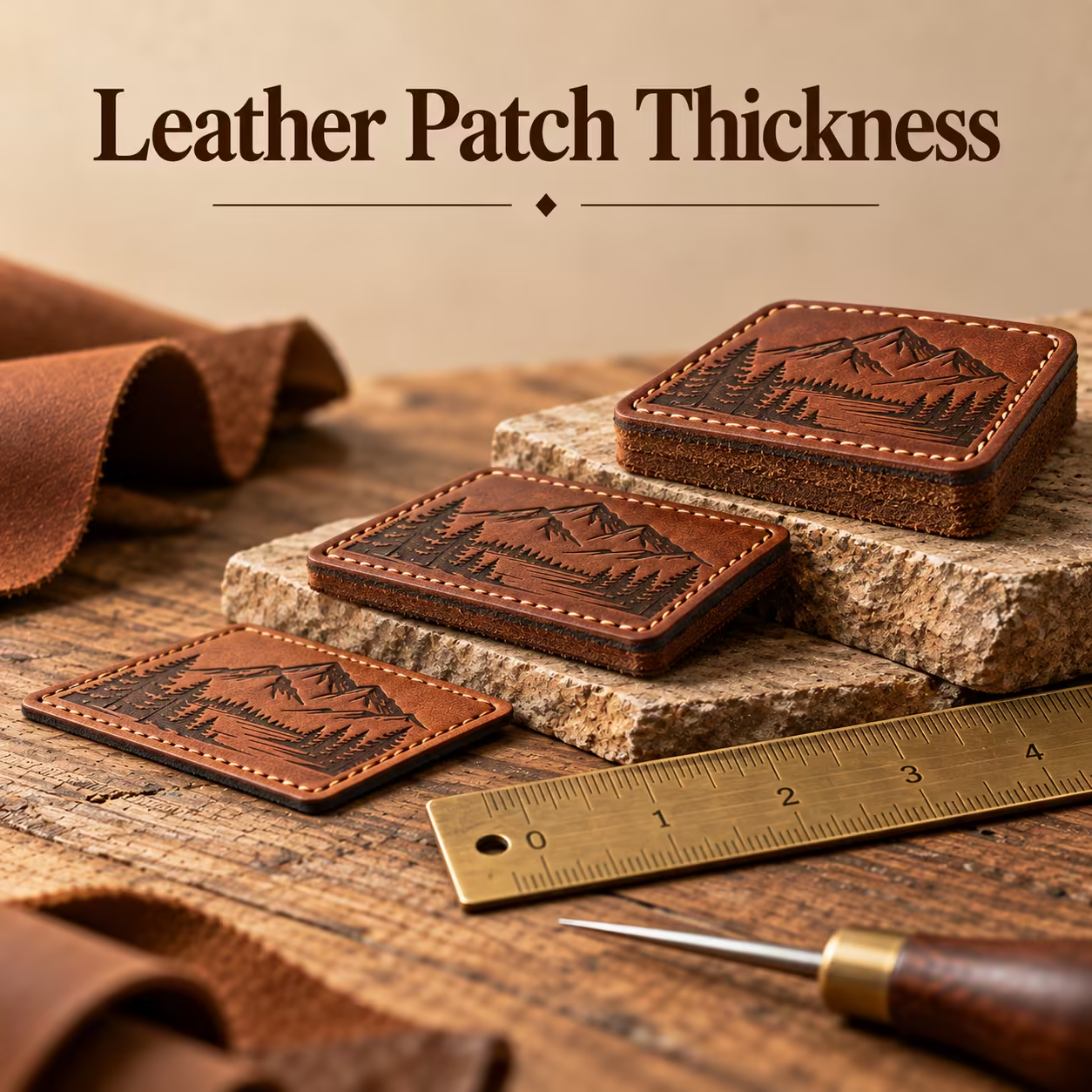
Leather patch thickness affects stiffness, weight, sewing and the depth a design can support. Select thickness together with material and backing: a patch needs to follow its garment while retaining enough body for the chosen logo finish.
On this page · 13 sections
- Why Leather Patch Thickness Matters
- Confirming Material and Finished Thickness
- Best Thickness for Hats
- Best Thickness for Jeans
- Best Thickness for Bags
- Best Thickness for Jacket Back Patches
- Thickness for Debossing
- Thickness for Embossing
- Thickness and Sewing
- Thickness and Flexibility
- Recommended Thickness by Application Table
- FAQs
- Turn the details into a clear specification
Why Leather Patch Thickness Matters
Thickness matters because a patch becomes part of the product’s moving surface. A stiff emblem can lift at the edges on a cap, while an overly soft panel may not support the desired relief. Evaluate the complete patch, including reverse layers.
Confirming Material and Finished Thickness
Our leather patch thickness range is 1.2–2.0 mm. Embossed designs require a minimum thickness of 1.5 mm. Select the exact thickness alongside the material, logo relief, receiving product and backing.
| Specification | Thickness | What to check |
|---|---|---|
| Leather patch range | 1.2–2.0 mm | Flexibility, sewing and placement |
| Embossed patches | At least 1.5 mm | Raised logo relief and material support |
| Complete backed patch | Confirm total with selected backing | Additional adhesive or hook-and-loop bulk |
State whether a quoted thickness describes the face material or the complete backed patch. Ask for a sample where the fit on a cap, waistband or garment is critical.
Best Thickness for Hats
A hat patch should bend with the crown without forcing the panel flat. Compare samples on the cap model, especially across a centre seam. A thinner flexible construction may help, but the artwork and backing still need enough support.
Best Thickness for Jeans
A jean label should sit comfortably on the waistband and clear belt loops. Thickness adds bulk where fabric layers already overlap. Test the label with the belt and intended seam construction rather than evaluating the leather in isolation.
Best Thickness for Bags
Bag patches can use more body on a stable external panel, but pockets and folding sections need flexibility. Match the patch to the local construction. A stiff emblem on a soft tote may change how the fabric hangs.
Best Thickness for Jacket Back Patches
Large jacket back patches need to flex over a broad area. Increasing size and thickness together can make a panel restrictive. Evaluate a full-size template and material sample with the jacket worn and moving.
Thickness for Debossing
Debossing needs sufficient material response to retain a clear recess. Deeper impressions are not automatically better: excess distortion can reduce detail or change the patch shape. Select stock and tooling together for the intended visual depth.
Thickness for Embossing
Embossing needs material body that can support raised features. The height and width of relief interact with thickness and flexibility. Ask whether the chosen logo is suitable before increasing the patch thickness to solve a design problem.
Thickness and Sewing
Sewing must pass through the leather, backing and garment layers. Needle choice, machine capability and thread need to suit the combined stack. Keep a practical stitch margin and test on a representative offcut before sewing the finished item.
Thickness and Flexibility
Thickness and flexibility are related, but they are not interchangeable measurements. Two equal-thickness leathers can bend differently because of tanning, coatings or backing. Request both a thickness specification and a physical handle reference when fit matters.
Recommended Thickness by Application Table
Use the table to identify the property to prioritise by placement. Exact thickness recommendations require the chosen stock, patch size and garment construction; they should be confirmed together rather than copied from an unrelated product.
| Application | Property to prioritise | How to verify |
|---|---|---|
| Caps | Conformability over the crown | Bend assembled sample on the cap model |
| Beanies | Low bulk and cuff flexibility | Check normal knit stretch |
| Jeans | Comfort at a layered waistband | Check loops, belt and seam stack |
| Bags | Body matched to the panel | Test filled and folding positions |
| Jacket backs | Flex over a large area | Use a full-size outline and material reference |
FAQs
Should thickness include the backing?
Record both the substrate thickness and total assembled thickness when fit matters. Reverse layers can add noticeable bulk.
Is the thinnest patch always best for hats?
No. It must also support the design and attachment. Evaluate flexibility and fit together.
Can equal-thickness leathers bend differently?
Yes. Tanning, surface coatings and supporting layers affect the handle.
Turn the details into a clear specification
Send your logo, dimensions and quantity with the material choices discussed above. Include the receiving product and any wash or delivery requirements so the quotation can address your intended use.