Full-Grain vs Top-Grain Leather for Patches
Full-grain leather retains the natural grain surface; top-grain describes leather from the grain layer and may include corrected finishes. For patches, the useful comparison is the chosen natural or corrected surface, because grain, coating and thickness affect logo clarity more directly than a sales label.
What Is Full-Grain Leather?
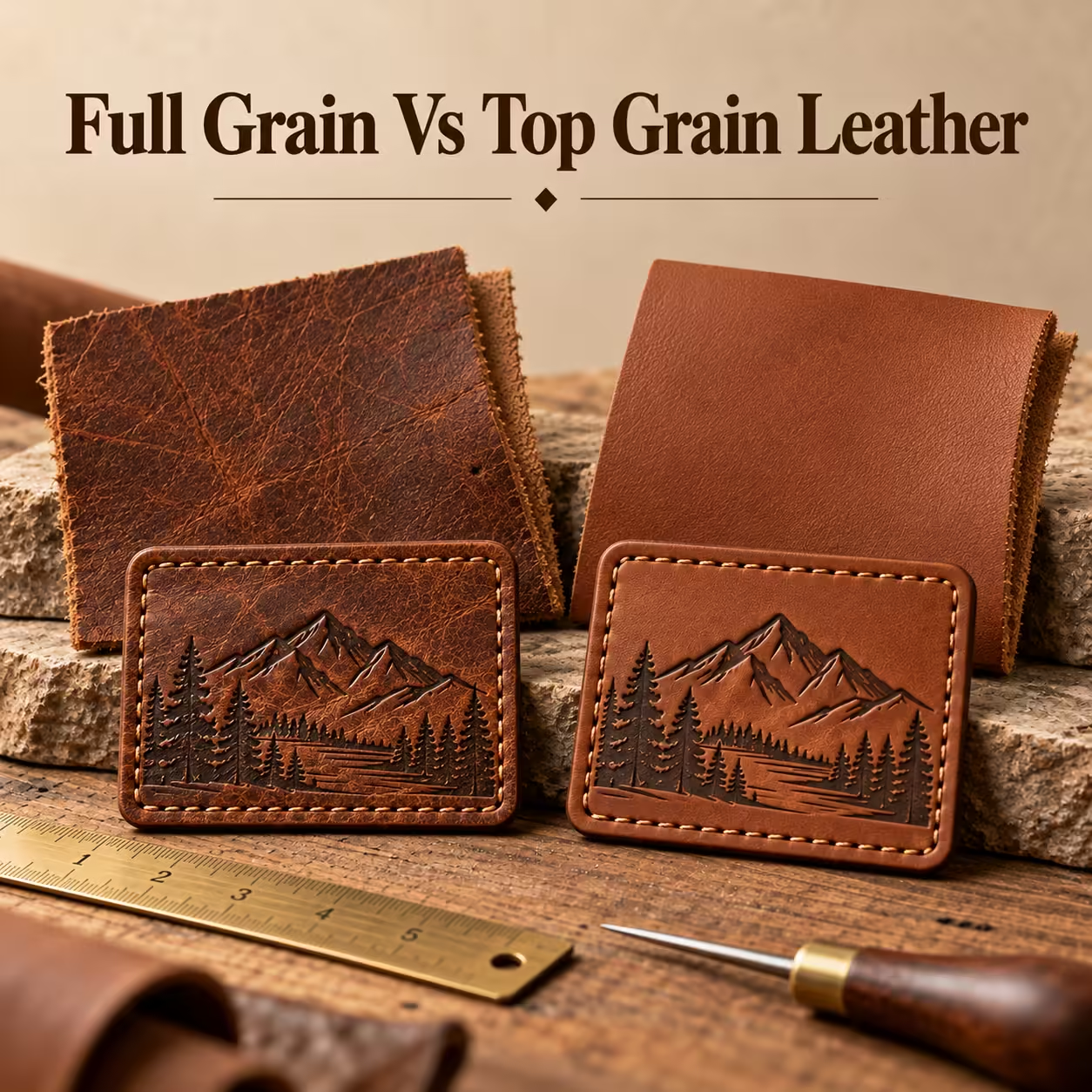
Full-grain leather keeps the original grain surface without buffing it away. Natural markings can remain visible within the patch. That character can support a heritage appearance, but it also means identical logos may sit on slightly different surface patterns.
What Is Top-Grain Leather?
Top-grain leather comes from the grain-bearing layer of the hide. The term can include full-grain leather, although retail comparisons often use it to mean corrected grain. Ask whether the actual stock is buffed, pigmented or coated to understand the difference.
Technical reference: Leather Research Laboratory: full grain and top grain. This reference does not establish our stock or service specifications.
Surface Texture and Grain
Surface texture affects how light reveals a logo. Natural grain can remain prominent around a pressed design; a corrected face can create a more uniform background. Inspect the smallest letter openings on the finished patch, where texture has the greatest impact.
Patina and Ageing
Patina depends on the leather’s finish and exposure, not only its grade name. A less covered surface may change visibly with handling, while a heavily finished face can behave differently. Set expectations from a representative material rather than a generic ageing claim.
Durability
Durability depends on hide quality, thickness, tanning, finishing and application. Full grain is not a guarantee that a particular patch will outlast every corrected material. Consider edge wear, flexing and garment care as part of the comparison.
Debossing Performance
Debossing performance follows the material’s ability to form and retain a clean recess. A strong grain can add character while making small features less distinct. Compare the same die design on the candidate stock before deciding which impression suits the brand.
Embossing Performance
Embossing performance depends on body and formability as well as surface grain. The raised logo needs support without making the patch too stiff for its placement. Check whether the formed design remains clear after ordinary bending.
Fine Detail and Small Text
Fine text benefits from a surface and finish that keep letter edges distinct. A smoother face can help, but typeface, spacing and scale are equally important. Avoid choosing a leather label as a substitute for reviewing the actual artwork.
Colour Consistency
Colour consistency depends on hide variation and the applied finish. Corrected, coated stock can reduce visible differences, but it does not guarantee exact matching between batches. Maintain a physical reference when repeat orders need a consistent appearance.
Best Applications
Natural grain can suit denim, bags and visible heritage branding; a more uniform face can suit repeated labels with tightly controlled artwork. Choose by the desired finished effect. Either option still needs appropriate backing and care.
Comparison Table
The comparison below separates natural-surface characteristics from corrected-surface characteristics. Confirm the supplier’s terminology before ordering, since full grain and top grain are not always mutually exclusive labels.
| Attribute | Full-grain natural face | Corrected grain face |
|---|---|---|
| Grain | Original surface retained | Surface modified and possibly coated |
| Appearance | Natural markings may remain | More controlled surface can be possible |
| Logo background | Grain may remain prominent | Smoother face can improve edge visibility |
| Patina | Depends on the finish and exposure | Depends on the coating and exposure |
| Selection | Choose the desired natural character | Choose the desired surface consistency |
FAQs
Is full grain a type of top grain?
Top-grain terminology can include full-grain leather. Clarify whether the comparison concerns a natural or corrected surface.
Will full grain always show the sharpest text?
No. Grain, coating, artwork scale and process all affect clarity.
Does a grade name establish patch durability?
No. Evaluate the finished material, edge, backing and use conditions.
Turn the details into a clear specification
Send your logo, dimensions and quantity with the material choices discussed above. Include the receiving product and any wash or delivery requirements so the quotation can address your intended use.