Iron-On and Heat-Seal Leather Patches
Not every leather patch can be ironed on. Heat-seal leather patches use a specific adhesive construction, and application must be approved for the leather face and garment. Genuine leather and synthetic coatings can both be heat-sensitive, so the supplied instructions determine compatibility.
On this page · 12 sections
- Can Leather Patches Be Ironed On?
- What Is Heat-Seal Backing?
- Why Genuine Leather Is Heat Sensitive
- Faux Leather and Heat-Seal Backing
- Heat Press vs Domestic Iron
- Temperature, Pressure and Dwell Time
- Compatible Garments and Surfaces
- Heat-Seal Leather Patches for Hats
- Durability and Failure Modes
- When to Choose Sew-On Instead
- FAQs
- Turn the details into a clear specification
Can Leather Patches Be Ironed On?
Only leather patches expressly designed for heat application should be ironed or pressed on. An iron-on description does not guarantee domestic-iron suitability. Confirm the exact substrate, adhesive and equipment requirements before applying heat to a finished garment.
What Is Heat-Seal Backing?
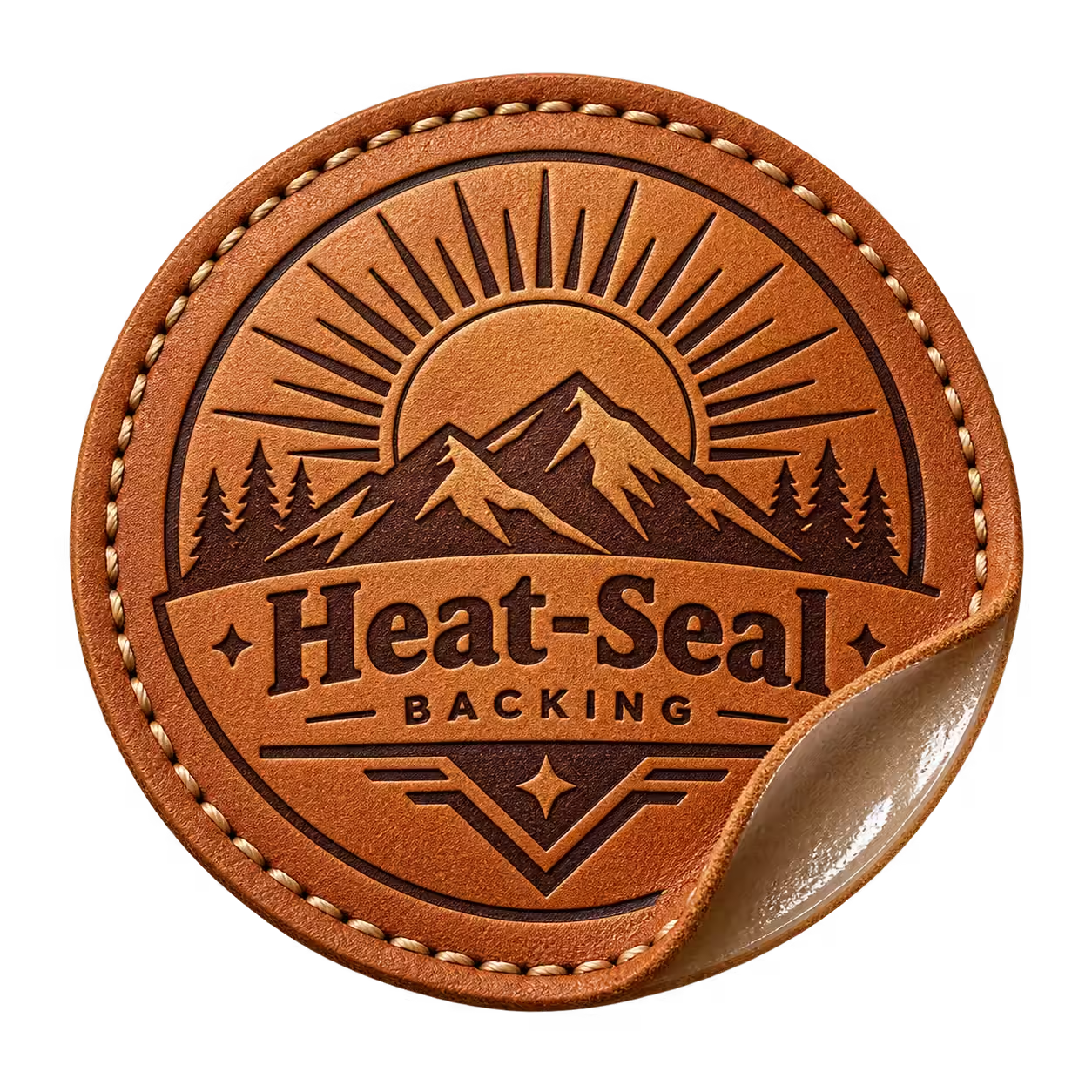
Heat-seal backing is an adhesive layer activated under specified temperature, pressure and dwell time. Its bond depends on contact with a compatible surface. The complete application specification also includes supporting equipment, cooling and any waiting period before washing.
Why Genuine Leather Is Heat Sensitive
Genuine leather can change colour, stiffen or distort under unsuitable heat. Surface coatings can respond differently from the hide beneath them. A qualified heat-applied leather construction needs its own instructions rather than a setting borrowed from synthetic patches.
Faux Leather and Heat-Seal Backing
Faux leather can work with some heat-seal systems, but its coating and fabric support must tolerate the process. The adhesive may need conditions that an unsuitable face cannot withstand. Verify all layers together before choosing a press setting.
Heat Press vs Domestic Iron
A heat press controls application conditions more consistently than many domestic irons. Curved items also need appropriate support. Use a domestic iron only when the supplier’s instructions explicitly allow it for the patch-and-garment combination.
Temperature, Pressure and Dwell Time
Temperature, pressure and dwell time are linked settings specified for the adhesive and substrate. There is no universal safe number for leather patches. Record the supplied values and follow the complete procedure, including cooling, instead of increasing heat to compensate for poor contact.
Technical reference: STAHLS’: product-specific leather patch application sheet. This reference does not establish our stock or service specifications.
Compatible Garments and Surfaces
Compatible garments must tolerate the required application and provide a surface the adhesive can bond to. Coatings, stretch, texture and seams can interfere. Check the care label and application guidance, then trial the exact material before a larger run.
Heat-Seal Leather Patches for Hats
Heat-seal hat patches need support that follows the crown and maintains contact across the bonding area. A centre seam can produce uneven pressure. Confirm the approved hat application method rather than applying a flat-garment procedure to a curved cap.
Durability and Failure Modes
Edge lifting, weak bonds and distorted faces can result from incompatibility or incorrect application. Diagnose the cause before reheating. A stronger bond is not achieved simply by applying more heat, and a secure initial bond does not establish wash durability.
When to Choose Sew-On Instead
Choose sew-on when heat compatibility is unclear, when the garment surface prevents reliable bonding, or when a visible stitched border is desired. Sewing also requires access and a suitable construction. Decide the method before ordering the patch backing.
FAQs
What temperature should I use?
Use only the value and complete procedure supplied for the exact patch, adhesive and garment. No universal leather setting applies.
Can I use a domestic iron?
Only when the construction’s instructions expressly allow it. Some systems require a controlled press and specialised support.
Should I reheat a lifting edge?
First identify the cause and consult the application guidance. Extra heat can damage an incompatible face without resolving the bond.
Turn the details into a clear specification
Send your logo, dimensions and quantity with the attachment choices discussed above. Include the receiving product and any wash or delivery requirements so the quotation can address your intended use.