
Leather vs Woven Patches
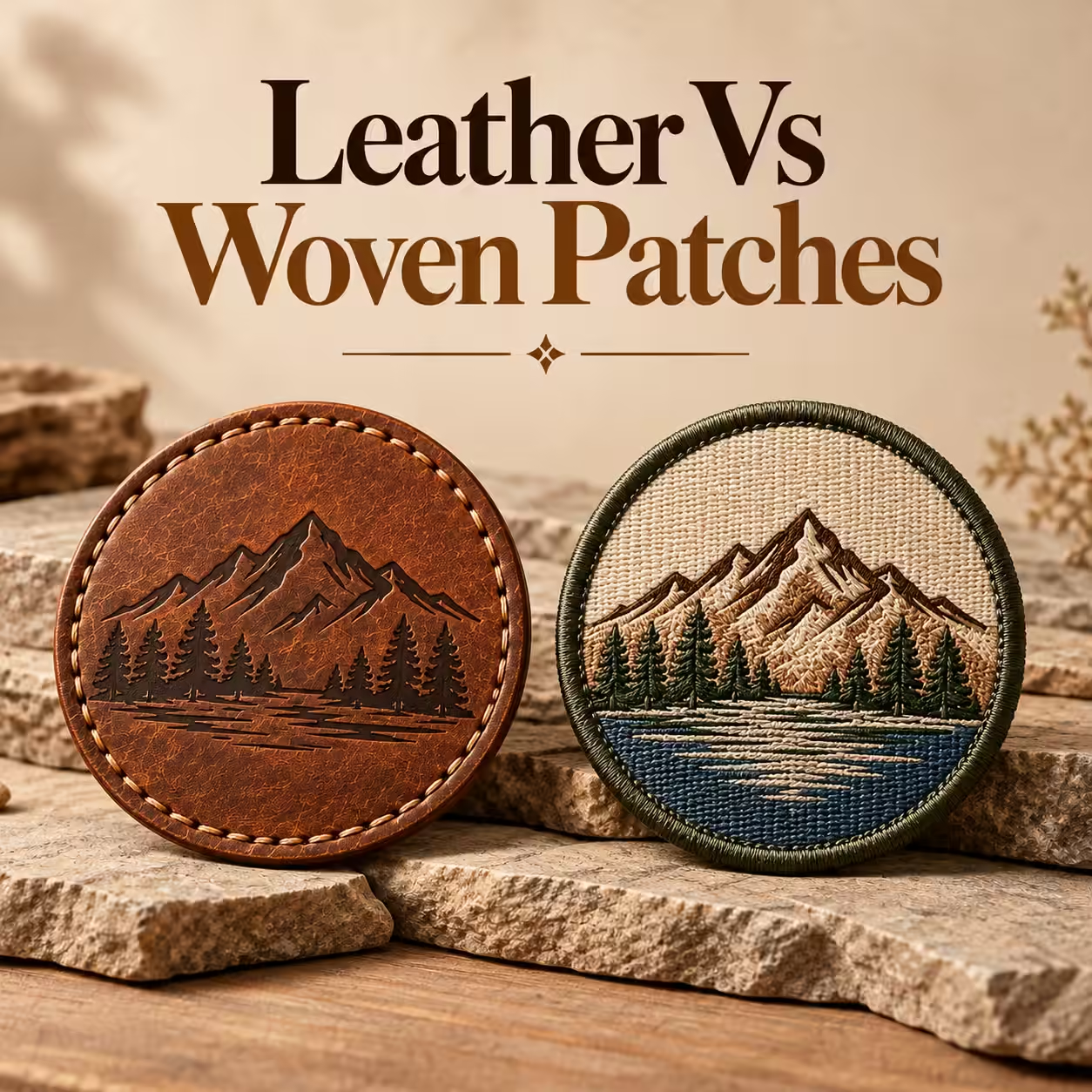
Leather patches provide grain and physical surface decoration; woven patches form flatter, detailed artwork with fine threads. Choose leather for a substantial tactile emblem or consider woven construction when a compact design depends on small lettering and a lighter textile feel.
Leather vs Woven: Quick Comparison
The key difference is the continuous leather face versus an image formed within woven threads. Woven patches can suit compact detailed artwork, while leather can emphasise depth and texture. The best option depends on the final logo and placement.
| Attribute | Leather | Woven |
|---|---|---|
| Artwork | Pressed, engraved or printed | Image formed by woven threads |
| Feel | Substantial or grained face | Flatter textile surface |
| Small lettering | Assess finish and contrast | Useful candidate for compact text |
| Bulk | Depends on stock and backing | Often selected for a lower profile |
| Edge | Cut leather outline | Finished textile outline |
| Care | Follow approved material instructions | Confirm yarn, edge and backing compatibility |
Material and Construction
Leather uses a cut substrate with an applied or formed design. Woven patches create the artwork through a thread structure before finishing the outline and reverse. Both still need a suitable edge and attachment system.
Texture
Leather texture follows the grain, surface finish and decoration. Woven texture is comparatively flat and textile-based. Compare how each looks beside the garment fabric, because a label’s contrast with its surroundings can be more important than the patch alone.
Fine Detail and Small Text
Woven construction can be a useful option for small lettering and detailed multicolour lines. Leather engraving may also retain detail, but the surface and contrast differ. A physical-size sample is the reliable way to judge the smallest required feature.
Colour Range
Woven colours come from selected yarns; leather colours come from its face and any added decoration. Colour range and matching depend on the production system. Compare physical references when a brand palette needs consistent relationships.
Thickness
Thickness varies within both categories and changes when backing is added. A woven emblem can be useful where low bulk is important. A leather label may provide more body, but its flexibility must still suit the garment.
Edge Finish
Leather edges are cut and may receive additional treatment; woven edges require a finishing construction that controls the thread boundary. The edge changes both appearance and wear. Ask to see the intended outline and border, not only the central artwork.
Washability
Washability must be confirmed for the finished emblem and garment. A textile construction can be a practical candidate when leather care is restrictive, but backing and colour still need assessment. Do not infer a washing temperature from the word woven.
Best Use Cases
Leather suits branding that benefits from grain or relief on caps, denim and bags. Woven patches suit labels where fine detail and textile feel are priorities. Product care and the available attachment area can change the recommendation.
Which Should You Choose?
Choose leather when the material itself contributes to the identity. Choose woven when the artwork and garment favour a flatter detailed textile emblem. If leather remains the preference, adjust the design to its actual production capability rather than forcing unreadable detail.
FAQs
Is woven the same as embroidered?
No. A woven design forms within the thread structure, while embroidery builds artwork with stitches on a support.
Can leather still reproduce small text?
Some engraved or printed constructions can, but size, grain and contrast remain limiting factors.
Which patch is thinner?
Compare assembled samples. Woven constructions are often selected for low bulk, but backing changes the final thickness.
Turn the details into a clear specification
Send your logo, dimensions and quantity with the construction choices discussed above. Include the receiving product and any wash or delivery requirements so the quotation can address your intended use.