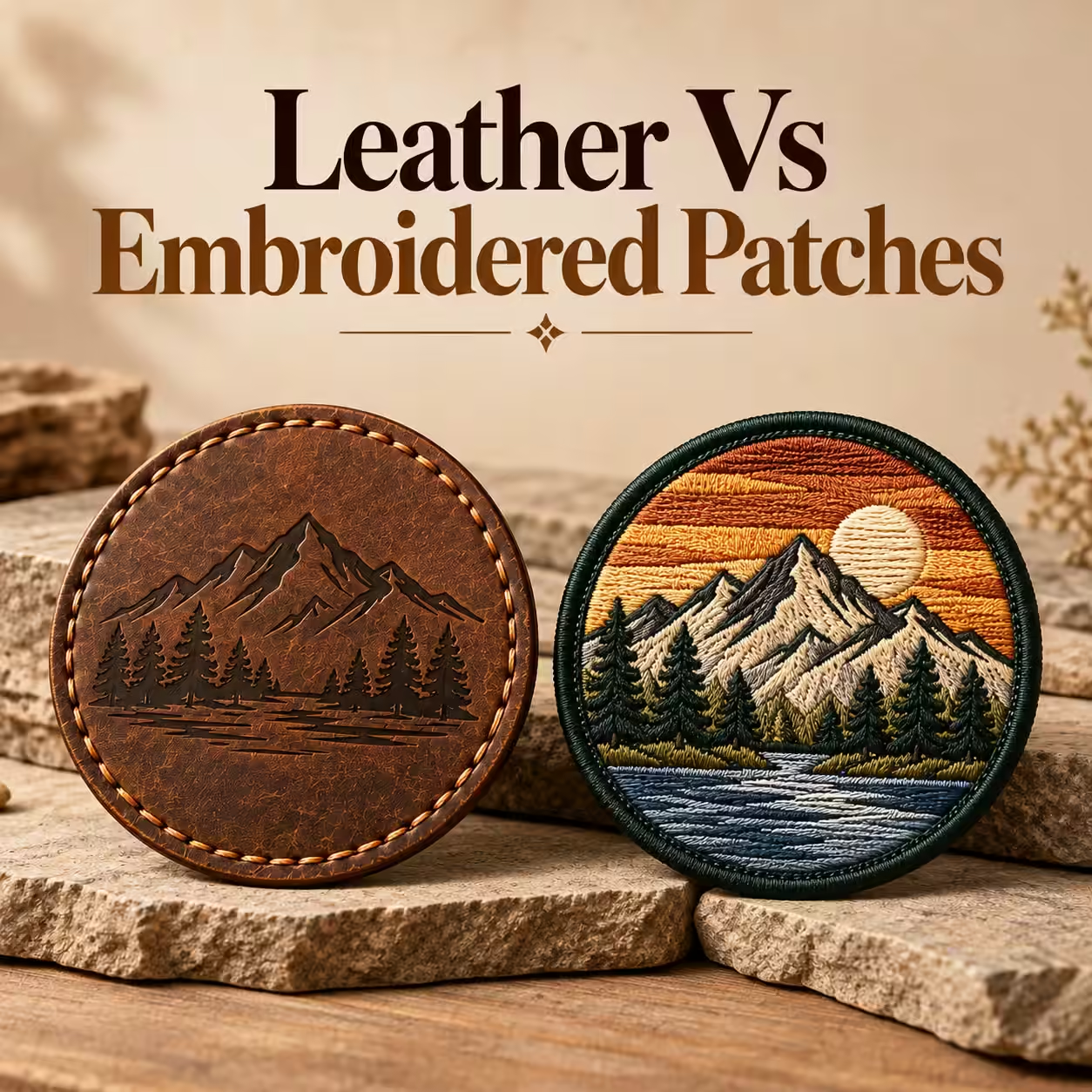
Leather vs Embroidered Patches
Leather patches emphasise grain, surface depth and a solid emblem face; embroidered patches build the artwork from visible stitches and thread colours. Choose around the logo, desired texture and garment care, with the backing and border included in the comparison.
On this page · 14 sections
Leather vs Embroidered: Quick Comparison
Leather and embroidery differ in both the face material and how the design is created. Leather is decorated by pressing, engraving or printing; embroidery forms the image with thread. Compare their appearance and maintenance against the intended garment.
| Attribute | Leather | Embroidered |
|---|---|---|
| Construction | Decorated continuous face | Thread stitches on a support |
| Texture | Grain, relief or surface graphic | Stitch direction and thread texture |
| Colour | Base shade; print or fill if selected | Selected thread shades |
| Fine detail | Depends on finish, scale and contrast | Depends on stitches and scale |
| Wear | Surface scuffing or material change | Thread or edge wear |
| Care | Confirm full construction | Confirm full construction |
Material and Construction
Leather patches use hide or a leather-look substrate as a continuous face. Embroidered patches stitch a design into a supporting construction. The edges and reverse layers vary in both categories, affecting bulk and attachment.
Texture and Appearance
Leather can give a smooth, grained or napped surface with tonal relief. Embroidery gives a visibly stitched texture whose direction catches light. The better appearance is the one that fits the product’s existing materials and branding style.
Colour Range
Embroidery uses selected thread shades to create coloured areas. Leather can remain tonal or add colour through print and fill. Neither method guarantees an exact physical colour match from a screen proof alone.
Fine Detail
Fine detail depends on scale and process. Dense lettering can become crowded in stitches or pressed leather, while engraving and other constructions may be alternatives. Compare the smallest required text on finished examples at the proposed dimensions.
Durability and Edge Wear
Leather can scuff or change at the surface; embroidered threads and borders can wear or snag. Edge construction and use determine which issue matters most. Avoid declaring a universal durability winner without testing the actual materials.
Washing and Care
Washing depends on the complete patch, including colour, border and backing. Textile embroidery can be a useful candidate for washable garments, but compatibility still needs confirmation. Leather should follow its specific care requirements alongside the garment’s instructions.
Best for Hats
Hat patches need to fit a curved crown without excessive bulk. Leather offers a solid emblem, while embroidery adds thread texture. Test placement and readability on the cap model, since both constructions can become too stiff or crowded at small sizes.
Best for Workwear
Workwear needs branding that suits its laundering and exposure. Compare approved embroidered constructions when the selected leather cannot tolerate the care routine. Removable attachment can also change the practical choice where the patch and garment need separate treatment.
Best for Jackets and Fashion
Jackets and fashion items can use either construction to reinforce a style. Leather can coordinate with denim and other leather details; embroidery can introduce stitch colour and texture. Placement, weight and cleaning should support the visual choice.
Price Factors
Leather pricing follows stock, decoration, tooling and backing; embroidery pricing follows its design and construction requirements. Compare the same dimensions, quantities and delivery scope. Setup charges and optional treatments can matter as much as the quoted unit price.
Which Should You Choose?
Choose leather for the desired grain or relief, and embroidery for a thread-based appearance and suitable colour design. Make washing and attachment part of the decision. If the logo is dominated by tiny text, include woven patches in the comparison.
FAQs
Does leather always outlast embroidery?
No. Surface, edge construction, use and care determine the comparison.
Which is better for a multicolour logo?
Embroidery is one option, while printed or filled leather may also suit the artwork. Compare colour and texture at actual size.
Are embroidered patches automatically machine-washable?
No. Check the thread, border and backing as part of the finished construction.
Turn the details into a clear specification
Send your logo, dimensions and quantity with the construction choices discussed above. Include the receiving product and any wash or delivery requirements so the quotation can address your intended use.