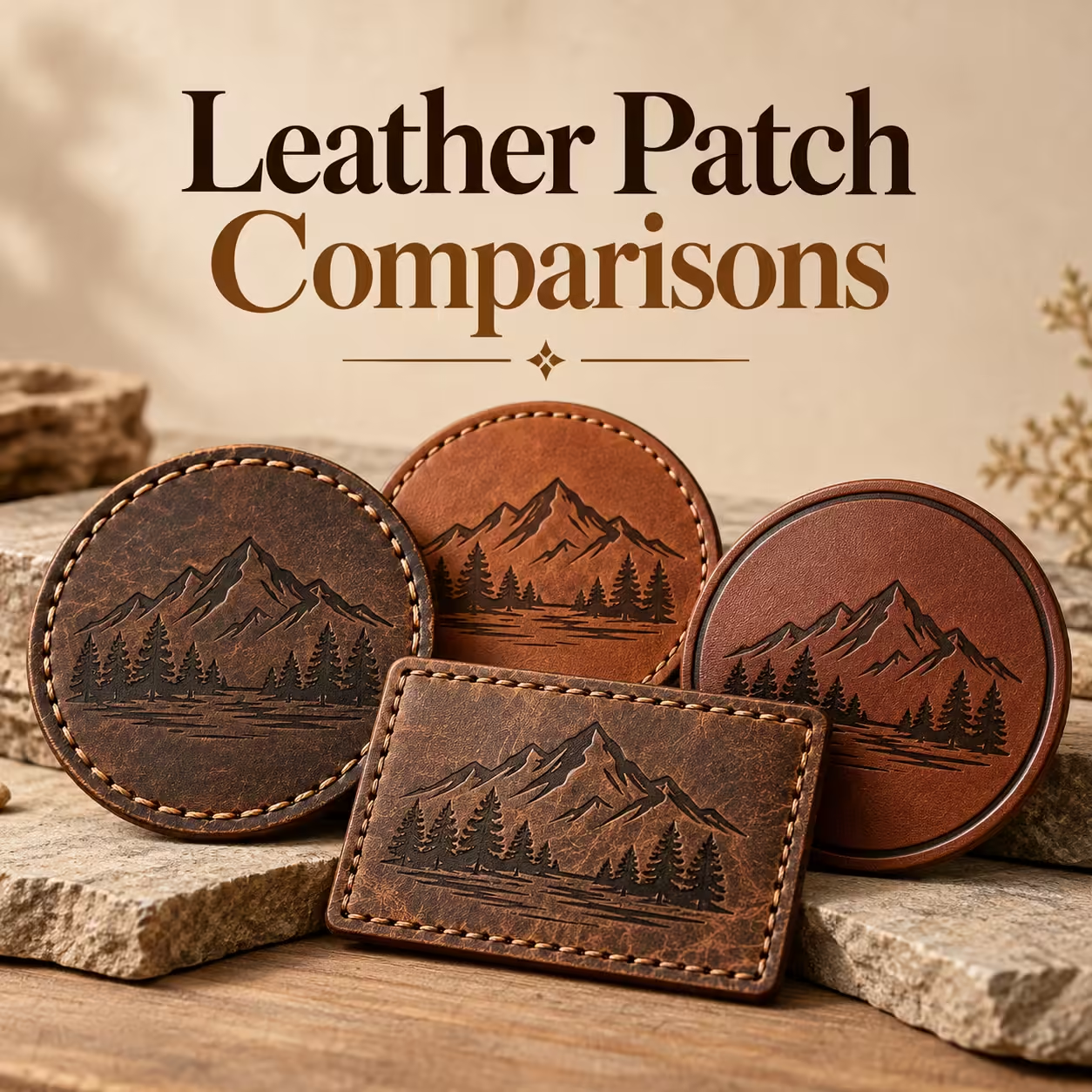
Leather Patch Comparisons
Leather patch comparisons help you choose between surface finishes and alternative patch constructions. Leather supplies grain and depth, embroidery adds stitch texture, woven patches prioritise flat thread detail, and PVC creates a moulded surface suited to different exposure conditions.
On this page · 11 sections
- Debossed vs Embossed Leather Patches
- Leather vs Embroidered Patches
- Leather vs Woven Patches
- Leather vs PVC Patches
- Which Patch Type Is Best for Hats?
- Which Patch Type Is Best for Workwear?
- Which Patch Type Is Best for Fine Detail?
- Which Patch Type Is Best for Frequent Washing?
- Comparison Matrix
- Frequently Asked Questions
- Turn the details into a clear specification
Debossed vs Embossed Leather Patches
Debossing places the design below the surrounding surface; embossing creates raised relief. The choice changes lighting, feel and the space needed around small artwork. Compare both finishes on the same logo and material to isolate the effect.
Leather vs Embroidered Patches
Leather and embroidery create different branding textures. Leather uses a continuous substrate with a decorated surface; embroidery builds a logo with stitches. Thread colours can suit multicolour artwork, while leather can suit tonal, tactile branding.
Leather vs Woven Patches
Leather and woven patches differ in construction and detail. Woven artwork is formed within a fine thread structure; leather artwork is pressed, engraved or printed onto its face. A compact text-heavy design may benefit from the flatter woven approach.
Leather vs PVC Patches
Leather and PVC patches serve different aesthetic and exposure priorities. PVC is a moulded plastic rather than rubber, and its face resists water. A leather emblem brings grain and potential patina but needs material-specific care.
Which Patch Type Is Best for Hats?
The best hat patch depends on the logo and crown. Leather can give a restrained tonal mark, embroidery offers stitch texture, and weaving can retain small lettering. Test the size and stiffness on the actual curved panel.
Which Patch Type Is Best for Workwear?
The best workwear patch matches the cleaning process and exposure. A patch that looks strong on a sample board may not suit repeated laundering. Compare the whole construction, including backing and attachment, before choosing by appearance.
Which Patch Type Is Best for Fine Detail?
Fine detail depends on the smallest clear line and gap at finished size. Woven construction and laser engraving are useful candidates, but their results differ in texture and contrast. Review physical examples rather than assuming one process resolves every tiny element.
Which Patch Type Is Best for Frequent Washing?
Frequent washing requires an approved patch-and-garment care combination. Textile patches are useful alternatives to leather when the washing routine is demanding, but thread, border and adhesive also matter. No construction label guarantees a wash rating.
Comparison Matrix
Use the matrix to compare the characteristic appearance and decision point of each construction. Detailed pairwise pages explain the trade-offs when you have narrowed the choice to two options.
| Construction | Characteristic appearance | Useful priority | Check carefully |
|---|---|---|---|
| Leather | Grain and decorated surface | Tactile or tonal branding | Material care and flexibility |
| Embroidered | Visible stitch texture | Thread-colour branding | Detail, border and wash compatibility |
| Woven | Flatter fine-thread artwork | Compact lettering | Edge finish and complete backing |
| PVC | Moulded plastic relief | Coloured, water-resistant face | Whole-item exposure and attachment |
Frequently Asked Questions
Is leather always the most durable choice?
No. Material, construction, exposure and cleaning determine durability. Compare specifications for the actual use.
Which comparison should I use for a tonal logo?
Start with debossed versus embossed, then assess engraving if the logo includes detail that pressing cannot retain at your size.
Turn the details into a clear specification
Send your logo, dimensions and quantity with the construction choices discussed above. Include the receiving product and any wash or delivery requirements so the quotation can address your intended use.