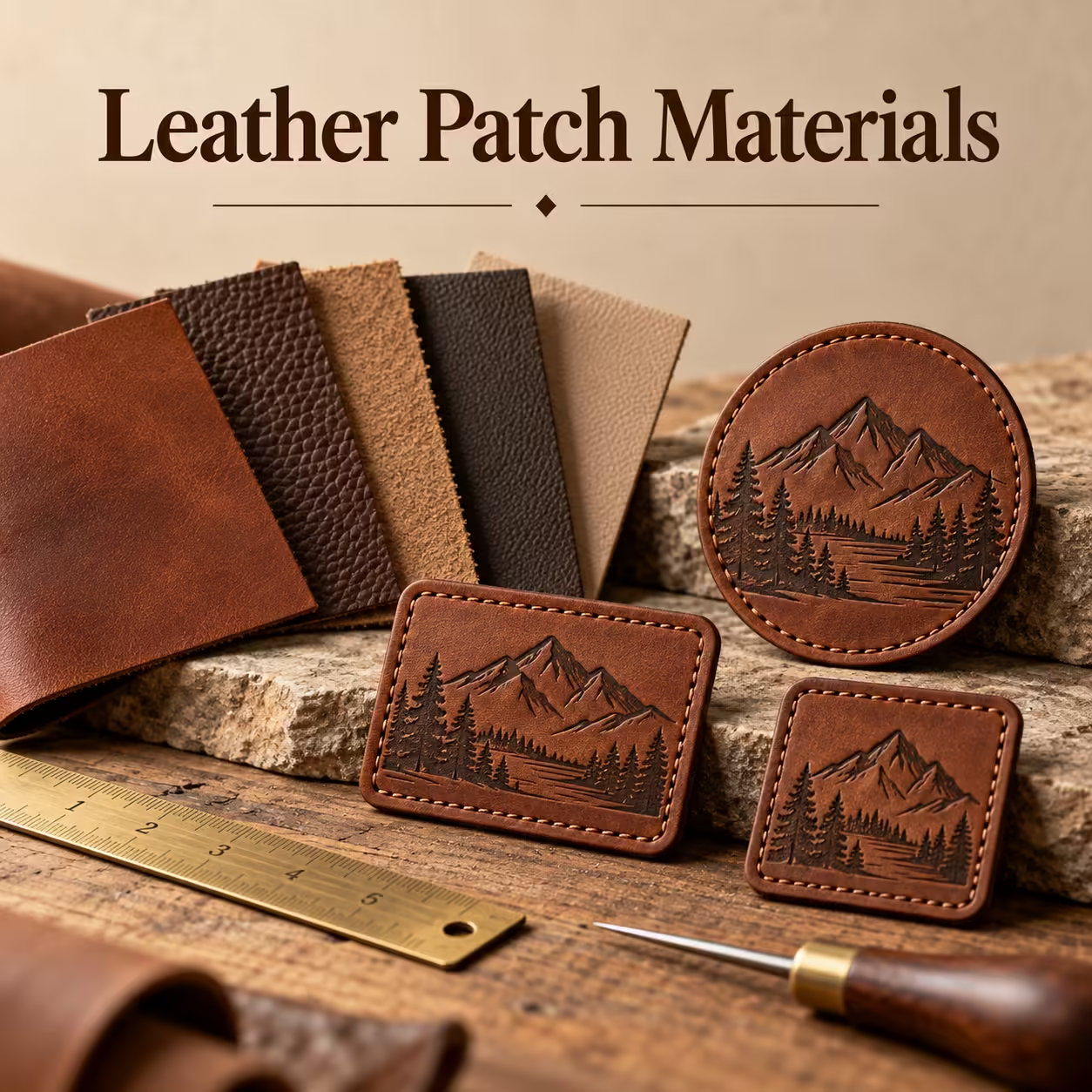
Leather Patch Materials
Leather patch materials include full-grain and other top-grain leathers, suede, and synthetic leather-look substrates such as PU-coated fabric. The substrate affects texture, logo reproduction, flexibility, colour consistency and ageing, so material selection comes before final artwork approval.
On this page · 11 sections
- What Materials Are Used for Leather Patches?
- Genuine Leather vs Faux Leather Patches
- Full-Grain vs Top-Grain Leather
- Suede Leather Patches
- How Leather Thickness Changes the Patch
- Leather Patch Colours and Natural Variation
- Best Material by Finish
- Best Material by Application
- Material Comparison Table
- FAQs About Leather Patch Materials
- Turn the details into a clear specification
What Materials Are Used for Leather Patches?
Leather patches use either animal-derived leather or a manufactured leather-look sheet. Grain structure and surface coatings affect how the design is pressed, engraved or printed. A material name alone does not establish its washability or compatibility with a particular backing.
Full-grain leather
Full-grain leather retains the original grain surface. Natural markings contribute character but can change the background behind small logo details.
Top-grain leather
Top-grain describes leather from the grain-bearing layer. Ask whether the actual stock has a natural or corrected face rather than assuming the term specifies its surface finish.
Suede
Suede has a napped surface that softens the visual edges of artwork. A bold, open mark is easier to assess against this texture than dense small lettering.
Faux / PU leather
Faux leather is a manufactured leather-look substrate, often using a PU coating. Confirm its exact construction before specifying heat, engraving or washing.
Genuine Leather vs Faux Leather Patches
Genuine leather supplies natural grain variation, while faux leather provides a manufactured surface that can be more consistent. Choose by the desired appearance, animal-free requirements and end use rather than treating either material as universally superior.
Full-Grain vs Top-Grain Leather
Full-grain leather retains the original grain surface. Top-grain is a broader term for leather from the grain layer and can include corrected surfaces as well as full grain. Ask whether the selected stock is buffed or coated when comparing logo reproduction.
Suede Leather Patches
Suede offers a napped surface with a soft, matt appearance. The nap softens the apparent edges of an impression, so larger, simpler artwork is easier to judge. A smooth leather sample is a useful comparison when small lettering is essential.
How Leather Thickness Changes the Patch
Thickness changes a patch’s stiffness, weight and ability to follow a curved panel. Extra body can support relief but may make a cap patch stand away from the crown. Assess the complete construction, including adhesive or hook-and-loop layers.
Leather Patch Colours and Natural Variation
Leather colour is a relationship between the base shade and the decorated mark. Hide variation can produce differences within a genuine leather batch, while coated faux leather usually provides a more uniform face. Compare physical swatches under the same lighting.
Best Material by Finish
The best substrate accepts the chosen decoration without losing its intended handle or surface. Pressed finishes need suitable body, engraving needs verified laser compatibility, and printing needs an ink-compatible face. Heat-seal compatibility also depends on the adhesive and garment.
Debossing
Debossing presses a logo into a compatible surface. Leave enough space between strokes for the recessed shapes to remain distinct at the finished size.
Embossing
Embossing creates raised relief above the surrounding face. Broad features and a suitable material body help the formed logo remain clear.
Laser engraving
Laser engraving follows digital artwork to alter the surface. Check the exact substrate and engraved contrast before relying on fine detail.
Printing
Printing reproduces artwork with ink on a compatible face. It is useful when colour or tonal information is essential to the logo.
Heat-seal
Heat-seal uses an activated adhesive in a qualified construction. Follow the exact patch-and-garment instructions rather than applying generic heat settings.
Best Material by Application
The best material follows the product’s movement and maintenance needs. Caps and knitwear benefit from flexibility, bags can accommodate more structure, and workwear demands an honest assessment of cleaning and abrasion. Use the garment as part of the specification.
Hats
A cap front needs a patch that follows the crown without crowding the peak or panel seams. Test the outline on the actual cap model.
Jeans
A jean waistband needs clearance for belt loops and a usable stitch margin. Check dye transfer and the garment wash process before choosing a label material.
Bags
A bag patch should sit on a visible panel with suitable attachment access. Check the filled shape and avoid repeated folds or strap abrasion.
Workwear
Workwear branding must suit the cleaning routine and exposure. A strong-looking patch is not evidence of industrial-wash compatibility.
Clothing labels
Clothing labels need a readable brand mark in the available placement area. Keep care compatibility and any separate product information requirements in the specification.
Material Comparison Table
Compare the practical trade-offs below before deciding on a material. Surface finish and construction vary within each category, so a physical reference remains important for colour, feel and logo clarity.
| Material | Surface character | Useful consideration | Confirm before approval |
|---|---|---|---|
| Full-grain leather | Natural grain retained | Visible individual character | Finish response and acceptable variation |
| Corrected grain leather | Adjusted or coated face | More controlled surface appearance | Exact coating and decoration result |
| Suede | Napped, matt face | Soft tactile branding | Detail clarity and care |
| Faux leather | Manufactured leather-look face | Surface consistency | Composition, process and care compatibility |
FAQs About Leather Patch Materials
Does genuine leather mean full grain?
No. Genuine identifies animal-derived leather; it does not specify a full-grain surface or one fixed quality grade.
Is all faux leather suitable for heat-seal?
No. Compatibility depends on the face, adhesive, support layers and garment together.
Can a material swatch prove logo quality?
No. A swatch shows the substrate; decoration needs a relevant finished reference or sample.
Turn the details into a clear specification
Send your logo, dimensions and quantity with the material choices discussed above. Include the receiving product and any wash or delivery requirements so the quotation can address your intended use.